
Last updated September 23, 2026
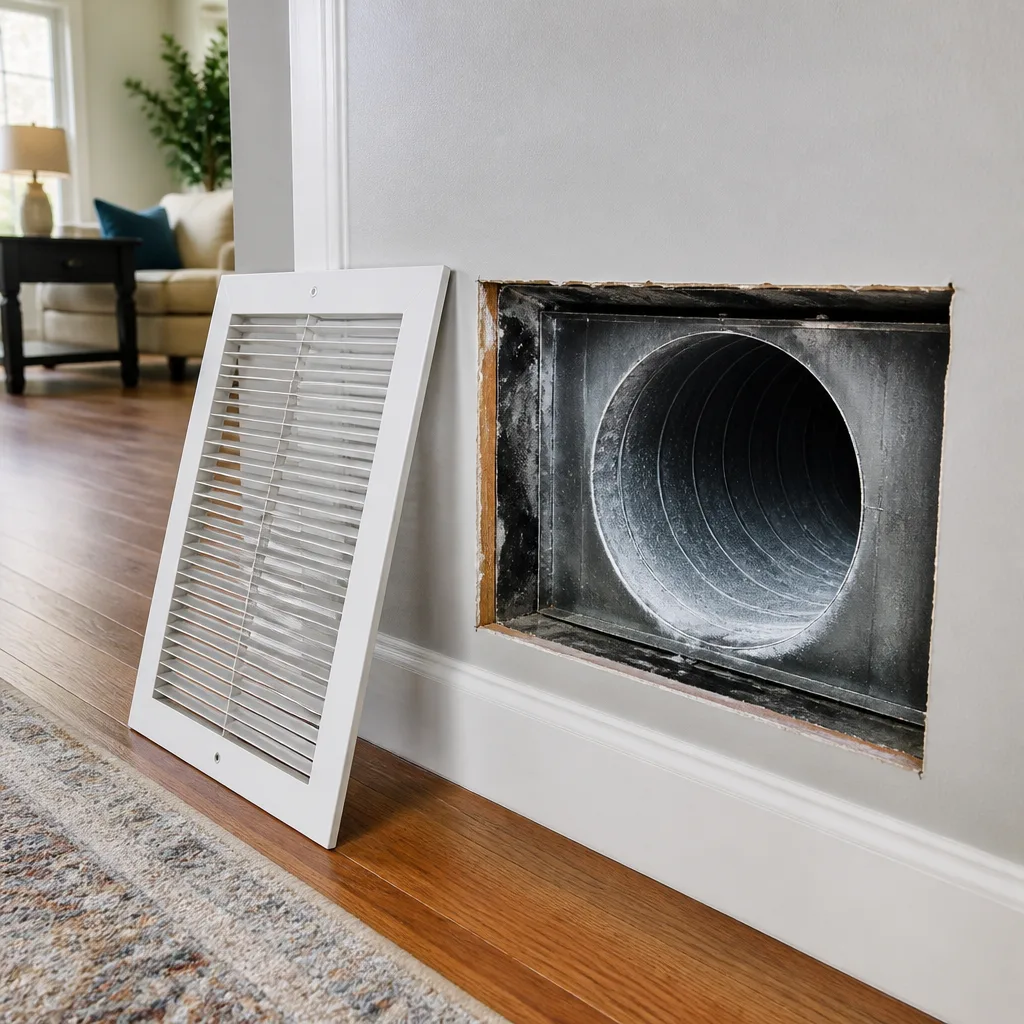
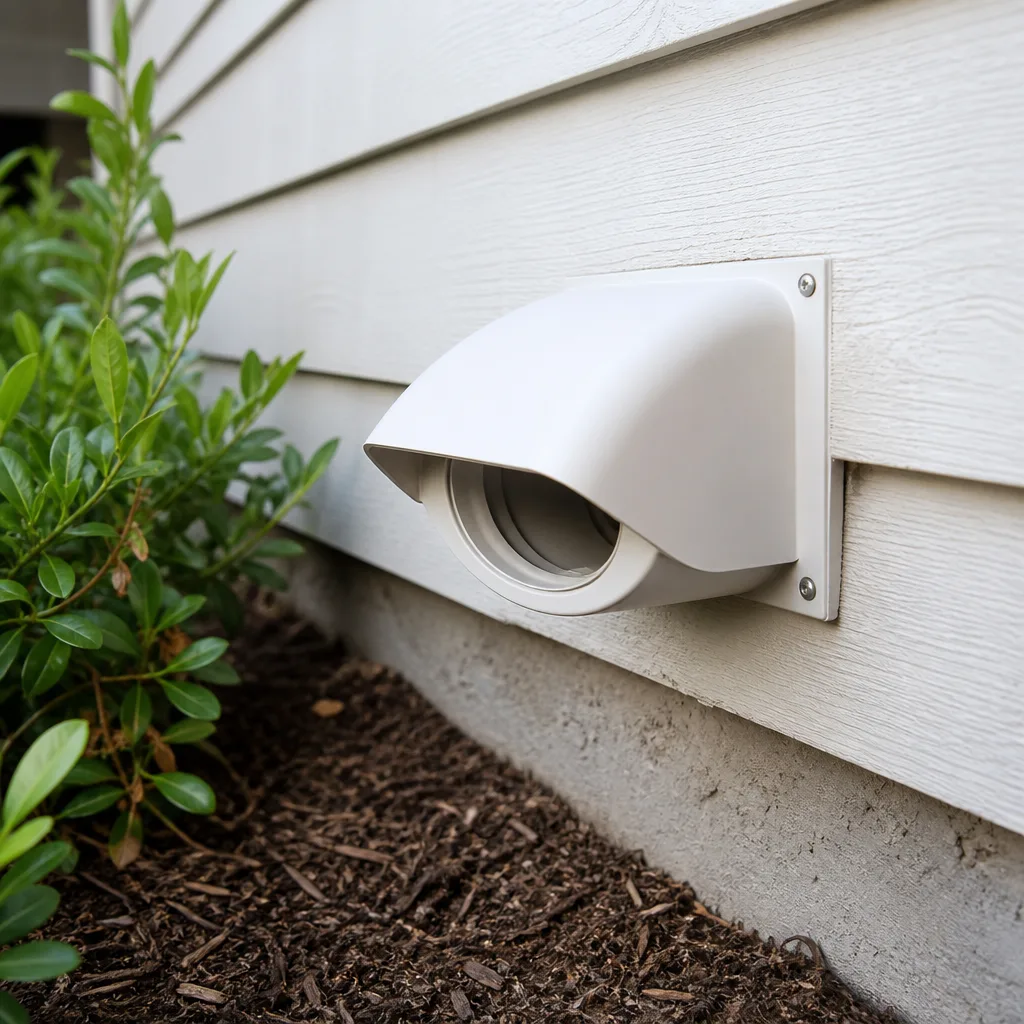
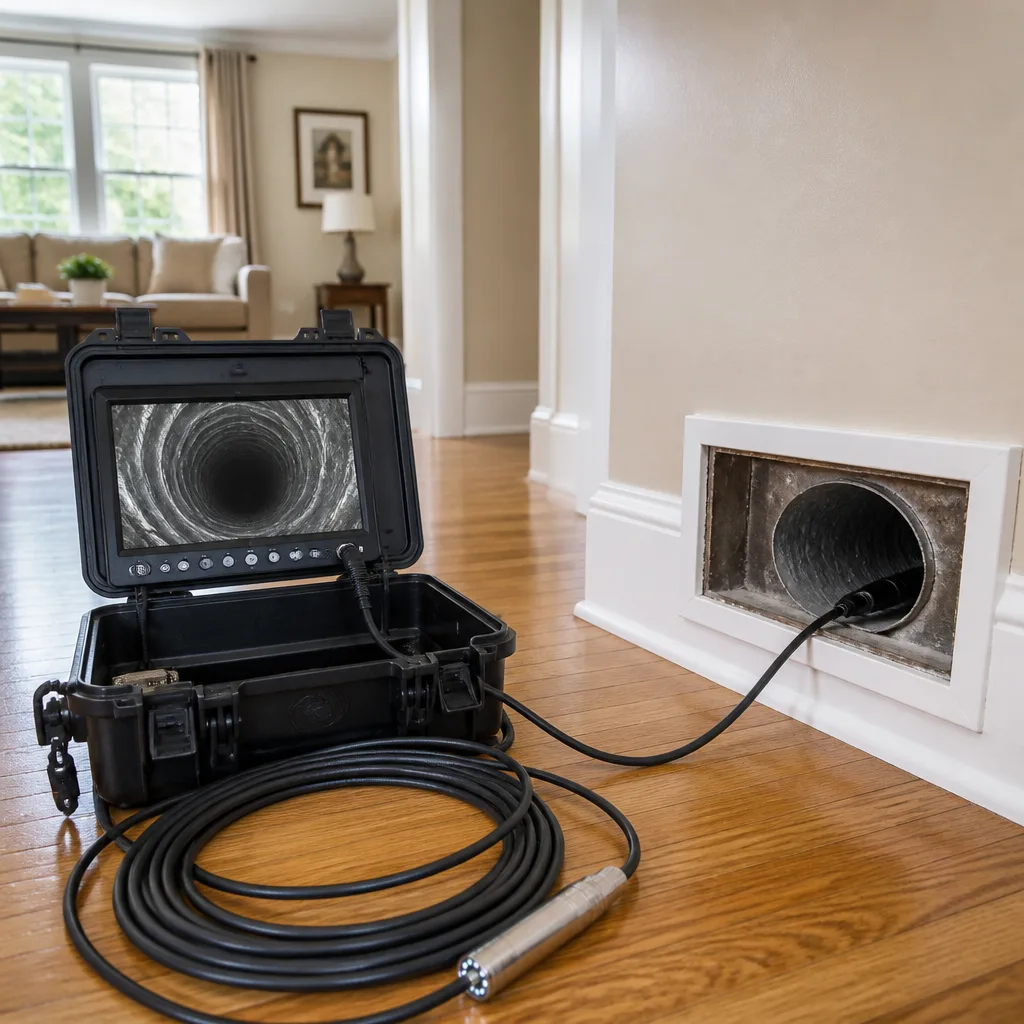
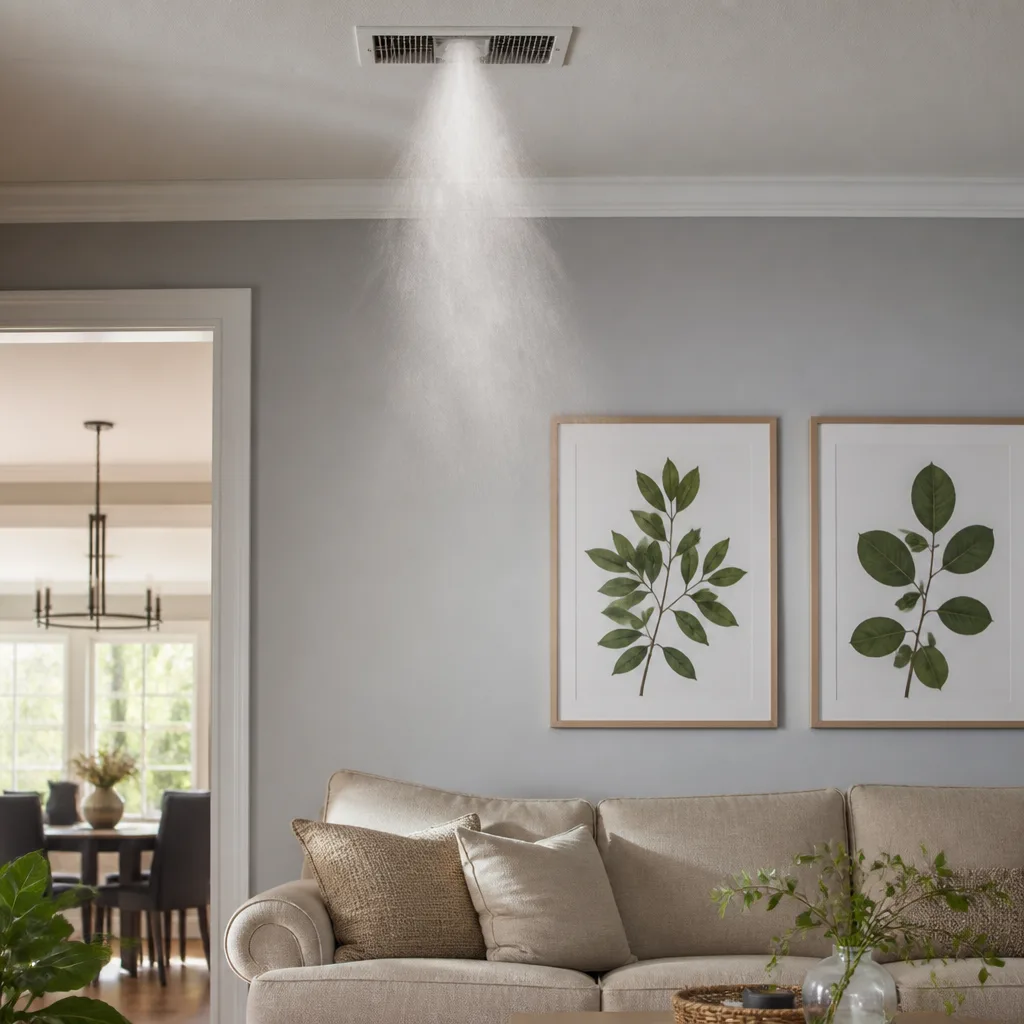
Whole-system duct and dryer vent check with before-and-after photos - you see exactly what came out of your vents
That "$99 whole-house special" is a bait ad - the real number appears once they are in your hallway, or the "clean" is a shop-vac at the register. We photograph the inside of your ducts before and after instead.
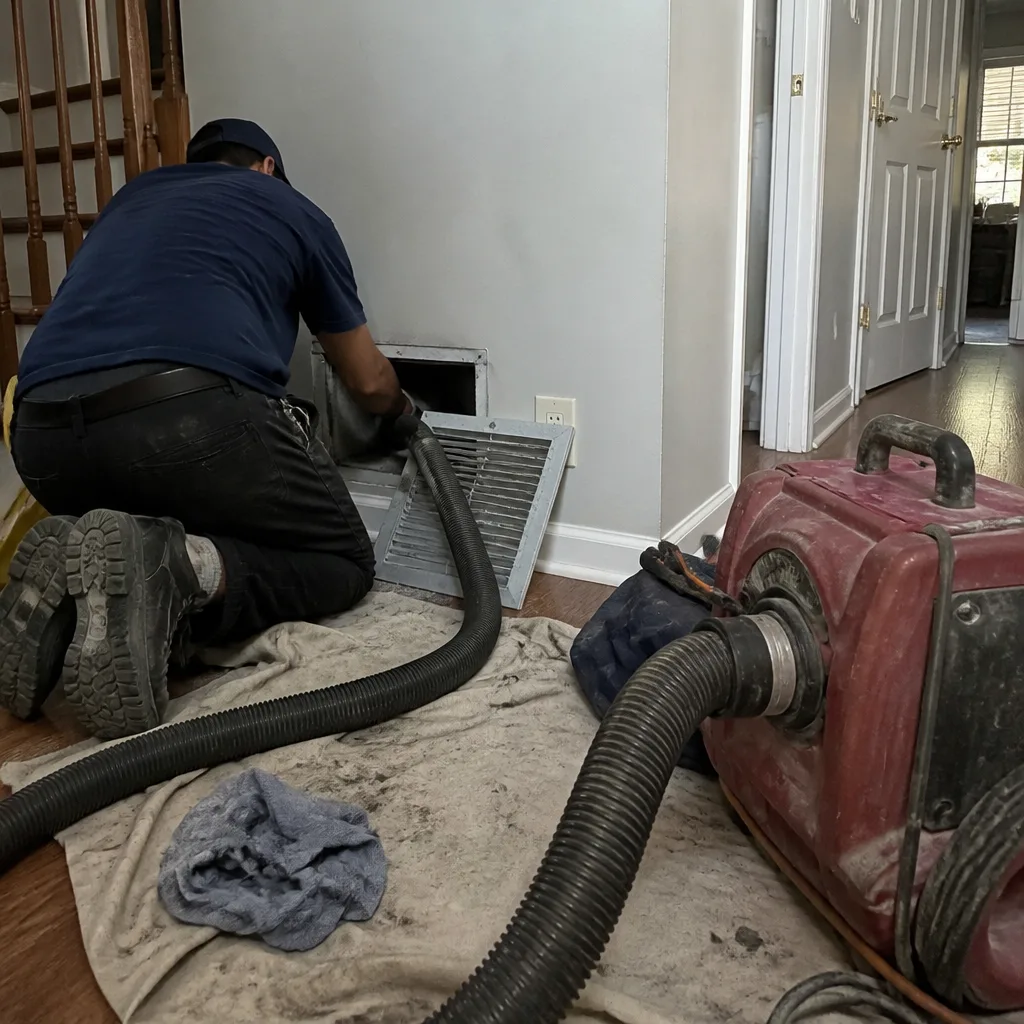 Before
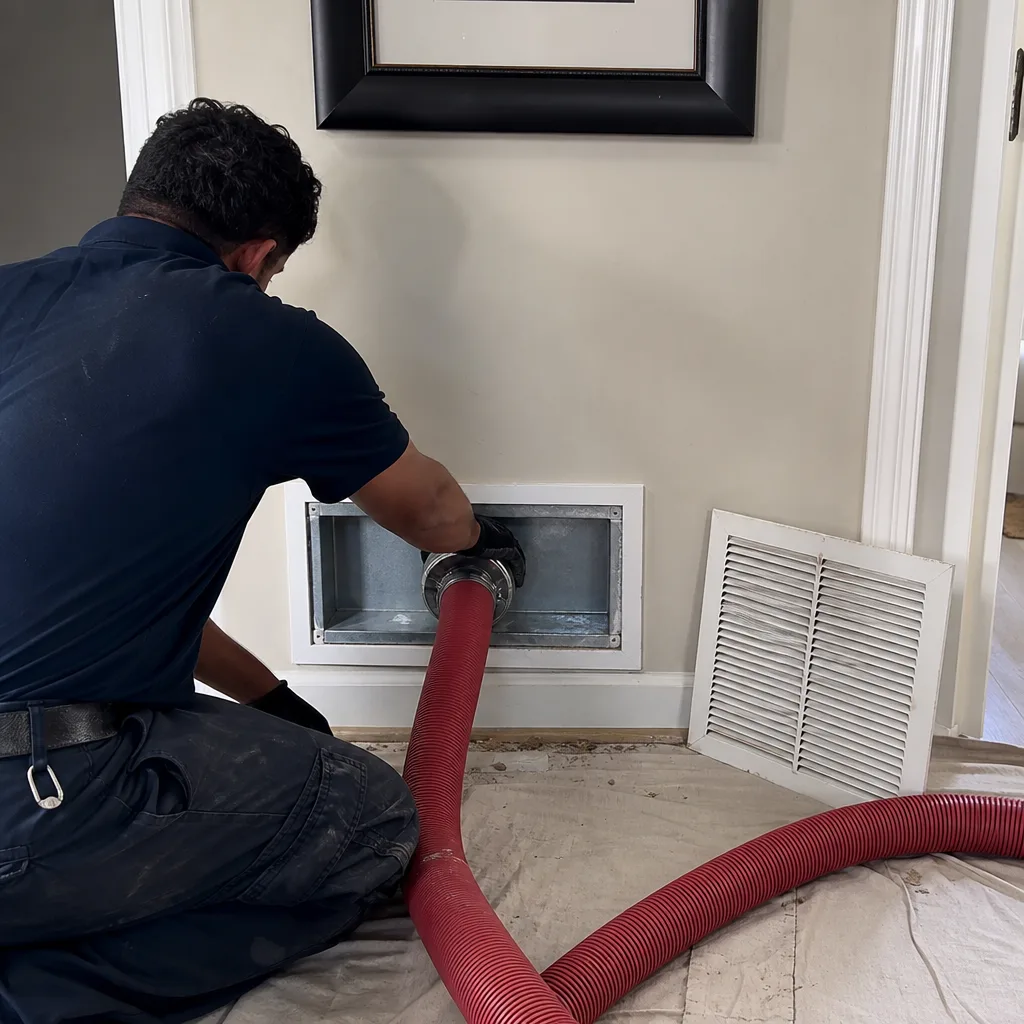 After
After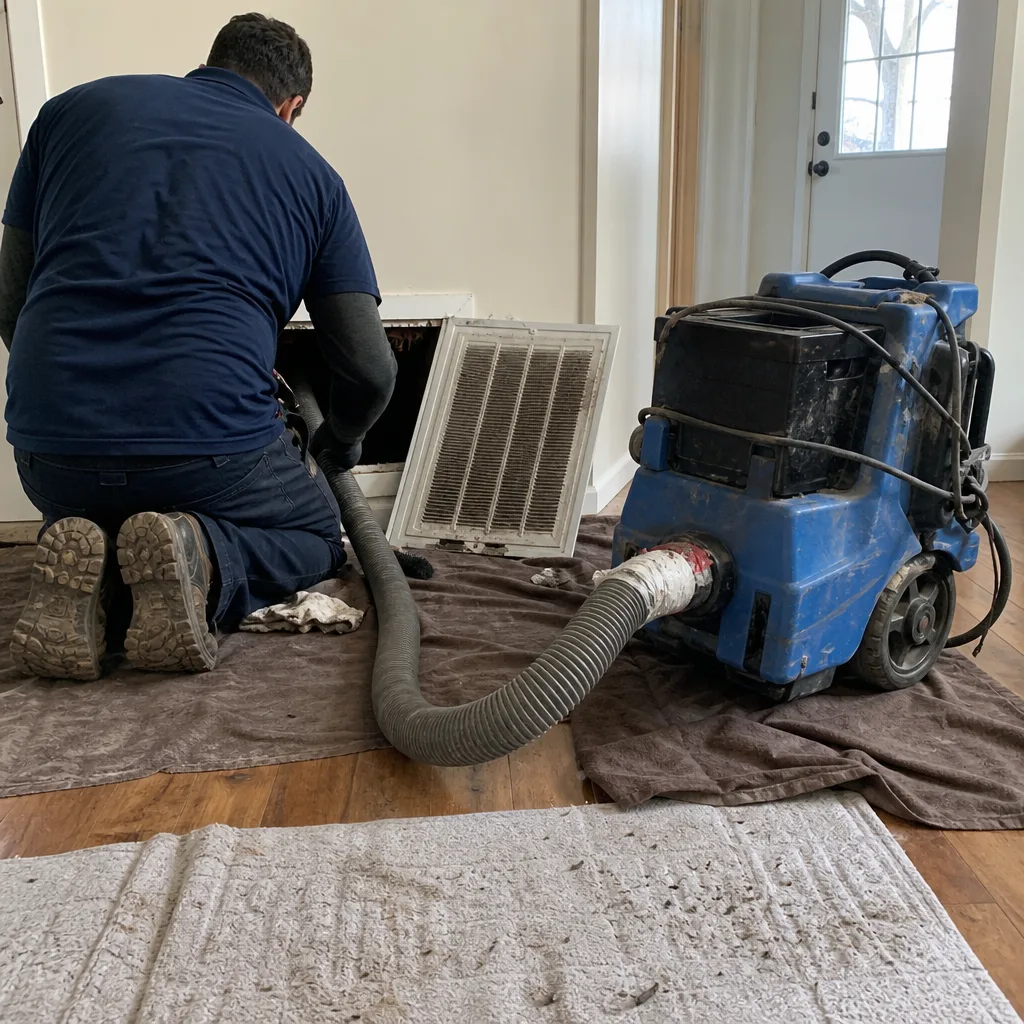 Before
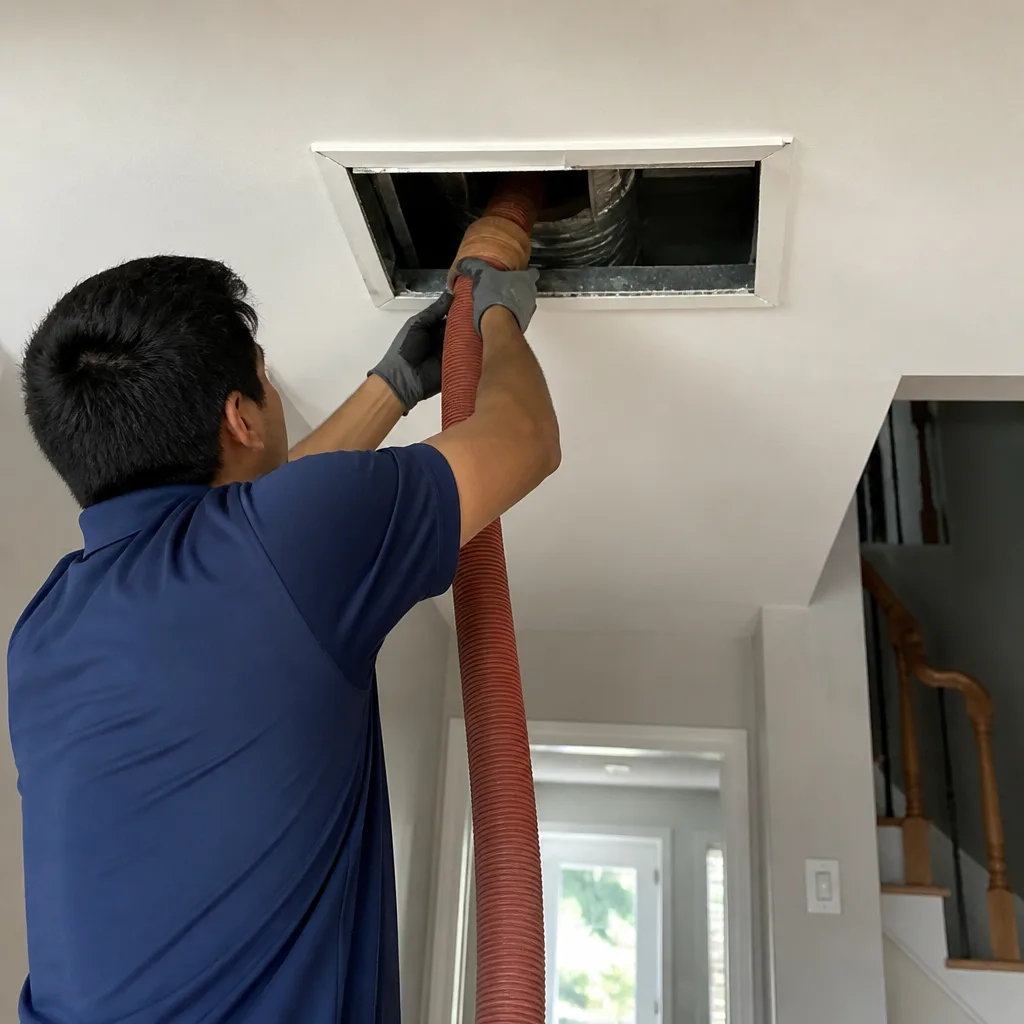 After
After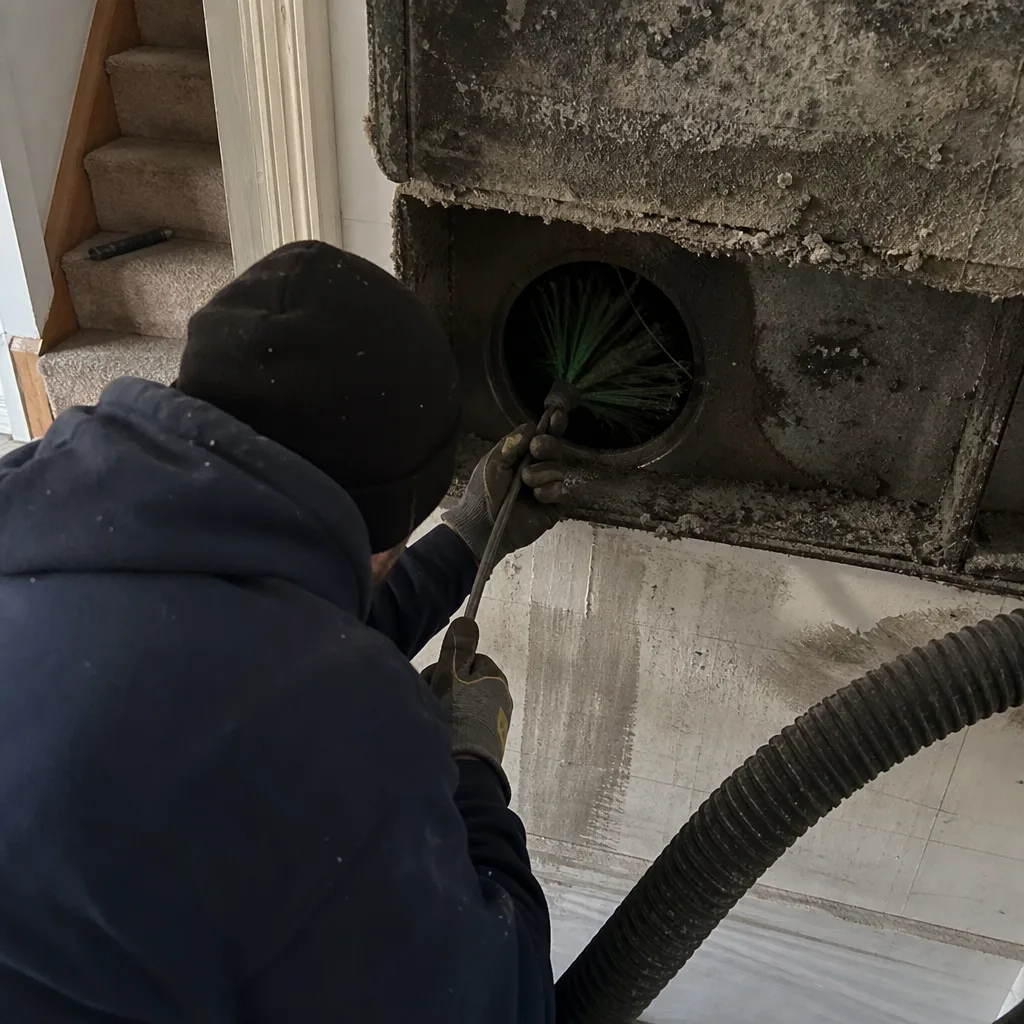 Before
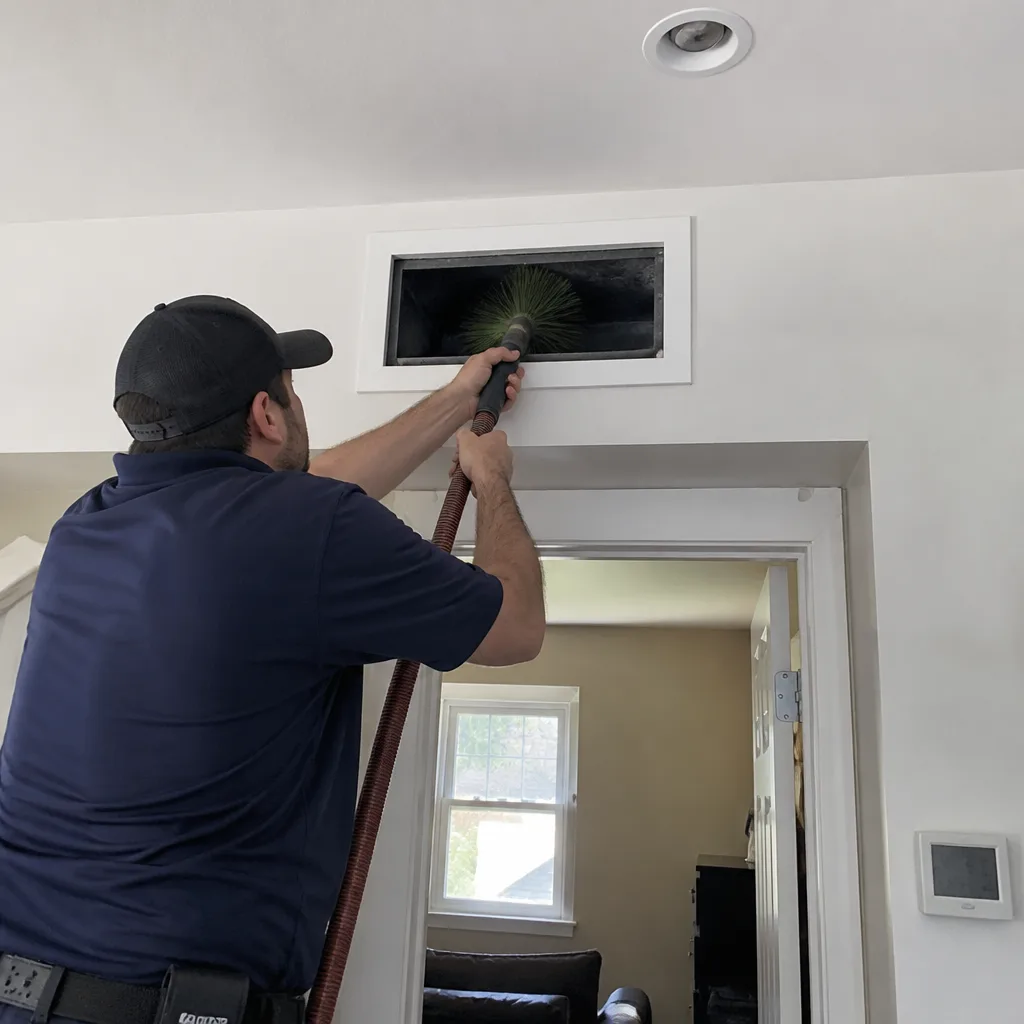 After
AfterAir Duct Cleaning Permits, Codes & Inspections in VA: What You Need to Know
Here’s the distinction that surprises most Alexandria homeowners: vacuuming debris from your ductwork requires zero permits, but reattaching a disconnected flex duct run triggers Virginia Uniform Statewide Building Code requirements that can surface years later during a home sale inspection. We’ve photographed the inside of 52,000+ duct systems since 2013, and the pattern is consistent - cleaning uncovers repair needs that fall into a regulatory gray zone most contractors never explain. Our Complete Guide to Air Duct Cleaning in Alexandria maps exactly where Virginia draws the line between routine maintenance and permitted mechanical work, what Alexandria City’s permit office actually requires, and how to protect yourself from retroactive disclosure headaches.
Quick Answer
Air duct cleaning itself - the removal of dust, debris, and contaminants from existing ductwork using negative-pressure extraction or mechanical brushing - does not require a permit anywhere in Virginia. However, duct repair, replacement, or modification that alters the mechanical system’s configuration, capacity, or connections typically requires a permit under the Virginia Uniform Statewide Building Code (VUSBC), enforced locally by Alexandria City’s Department of Code Administration.
Table of Contents
- What the Virginia Uniform Statewide Building Code Actually Says
- Cleaning vs. Repair: Where the Permit Line Falls
- How Alexandria City Handles Mechanical Permits
- What Inspectors Actually Look For
- Insurance Claims and Property Disclosure Rules
- Five Questions to Ask Before Any Duct Work Begins
- Documenting the Job: Photos, Permits, and Written Records
- Common Mistakes to Avoid
- When to Call a Professional
- Frequently Asked Questions
- The Bottom Line
BeforeAfterWhat the Virginia Uniform Statewide Building Code Actually Says
The Virginia Uniform Statewide Building Code, or VUSBC, adopts the International Mechanical Code (IMC) with Virginia-specific amendments. For homeowners, the relevant language lives in Chapter 1, Section 108, covering permits and application requirements, and Chapter 3, Section 306, governing duct construction and installation standards.
Here’s the critical distinction written into the code: “Repair and replacement” of mechanical systems requires a permit, while “routine maintenance” does not. The code explicitly exempts “minor repairs” from permit requirements, but defines “minor” narrowly - tasks that don’t alter the system’s design, capacity, or method of operation. Virginia’s amendments add a specific exemption for “cleaning of existing ducts, registers, and grilles” under the maintenance category, provided no components are removed, replaced, or reconfigured.
Where this gets complicated for Alexandria homeowners: the VUSBC delegates enforcement to local jurisdictions, and Alexandria City maintains its own interpretation guidelines through the Department of Code Administration. The city’s Mechanical Permit Application specifically asks whether the work involves “modification, replacement, or extension of existing ductwork” - any “yes” answer triggers plan review and inspection requirements.
We’ve encountered this directly in older Alexandria neighborhoods like Del Ray and Rosemont, where 1920s-era homes often have galvanized steel trunk lines with later-added flex duct branches. Air Duct Cleaning Warning Signs: A Alexandria Homeowner’s Reference Guide covers how cleaning these systems frequently reveals disconnected or deteriorated connections at the plenum (the central distribution box where conditioned air splits to individual duct runs). Reattaching that flex branch with a new collar and sealant? That’s repair work under VUSBC Section 108.2. Vacuuming the same branch while it remains connected? That’s maintenance, exempt under Section 108.2.1.
The code also specifies material standards for any permitted work. Ducts must meet SMACNA (Sheet Metal and Air Conditioning Contractors’ National Association) standards, flex duct must be labeled with R-value and flame spread ratings, and all connections in unconditioned spaces - common in Alexandria’s many crawl-space and attic installations - require insulation matching or exceeding existing levels. A contractor performing permitted repair work must document compliance with these standards, and the inspector verifies it on site.
Cleaning vs. Repair: Where the Permit Line Falls
After 52,000 homes, we’ve learned that the permit boundary isn’t intuitive. Homeowners naturally assume “duct cleaning” describes everything that happens between arrival and departure. The code sees it differently. Here’s how the distinction plays out in actual jobs we’ve documented in Alexandria.
Routine cleaning (no permit required):
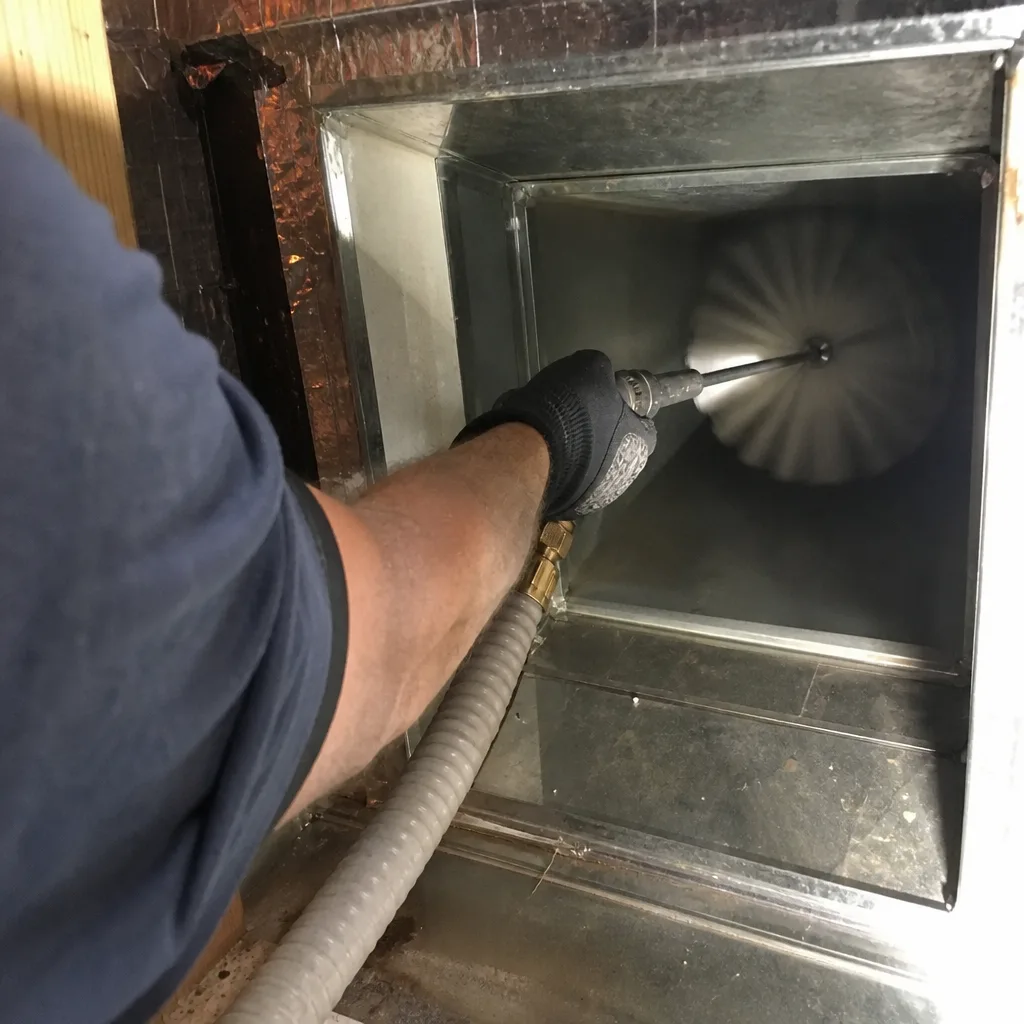
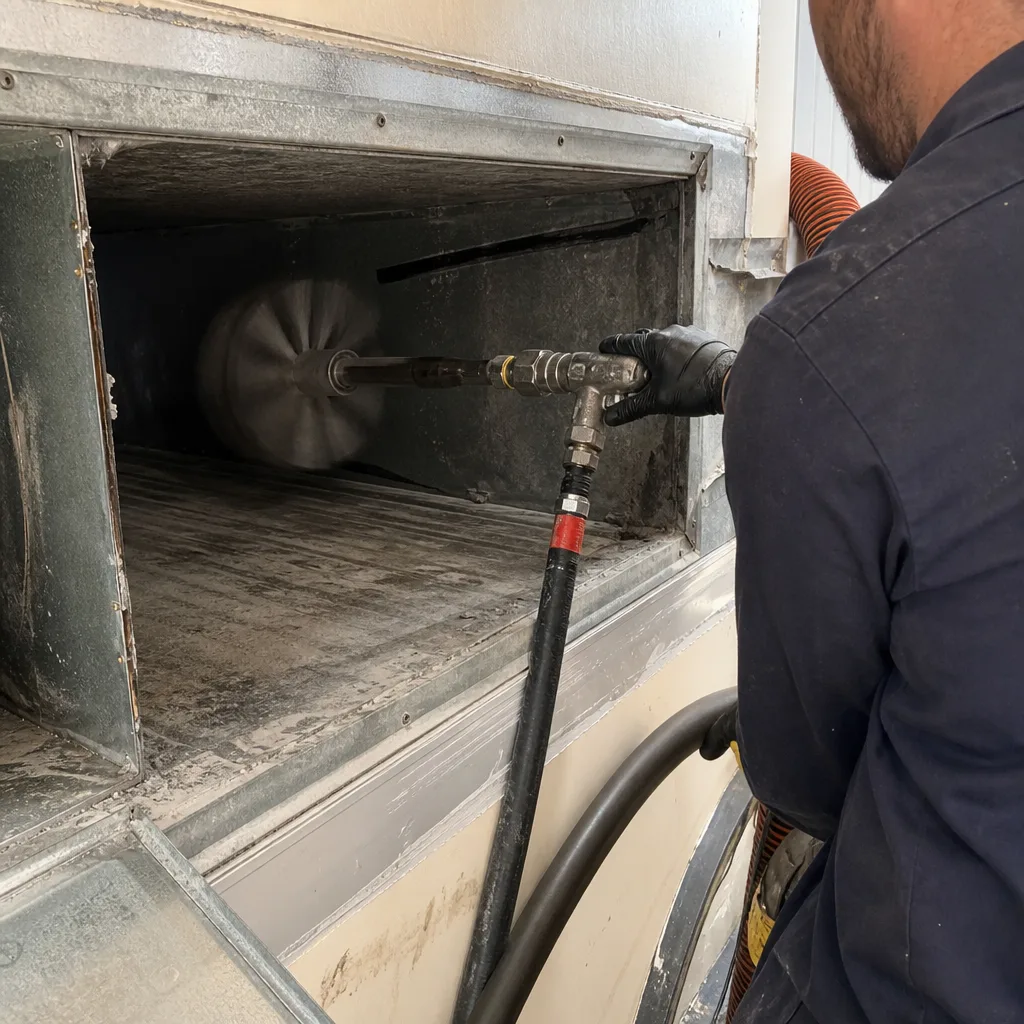
- Negative-pressure extraction of debris from existing duct runs using equipment like Rotobrush or Nikro systems
- Mechanical brushing of duct interior surfaces to dislodge accumulated dust and particulate
- Cleaning of registers, grilles, and return air openings without removal or modification
- Application of EPA-registered sanitizers to existing duct surfaces, provided no physical alteration occurs
- Photographic documentation of interior conditions before and after cleaning
Repair or replacement (permit typically required):
- Reattachment of disconnected duct sections, including flex duct pulled from collars or trunk line separations
- Replacement of deteriorated flex duct runs, even with identical specifications
- Installation of new duct collars, take-offs, or distribution boxes
- Sealing of leaks using mastic or tape where the repair covers more than 10 linear feet of joint (Alexandria’s threshold for “minor” vs. substantial repair)
- Modification of duct routing, including relocation of registers or changes to duct diameter
- Replacement of plenum sections or transition fittings
A real example from a 2019 job in Alexandria’s Carlyle neighborhood: Our camera showed a 3-inch debris build-up at the first elbow of a second-floor flex duct run, plus a complete separation at the plenum connection. The cleaning portion - extracting debris from the intact downstream section - required no permit. The repair portion - removing the damaged flex, installing new 8-inch insulated flex with a sealed collar connection - required a mechanical permit, plan review, and inspection. We quoted both scopes separately in writing, obtained the permit before work began, and the inspector verified the installation two days later.
Alexandria’s climate intensifies this boundary issue. Our humid summers and freeze-thaw winters accelerate flex duct deterioration in attic spaces, where temperature swings stress connections. We’ve found separated ductwork in roughly 15% of Alexandria homes built between 1985 and 2005, the peak era for flex duct installation. In many cases, homeowners called for cleaning and discovered repair needs they hadn’t anticipated - and contractors who didn’t explain the permit implications.
How Alexandria City Handles Mechanical Permits
Alexandria City’s Department of Code Administration processes mechanical permits through its Development & Permits Center on King Street. For homeowners and contractors, the practical steps look like this:
- Application submission. The contractor completes a Mechanical Permit Application, specifying the scope, property address, and licensed contractor information. Alexandria requires the permit holder to be a Virginia-licensed HVAC or Mechanical contractor - a handyman or cleaning-only business cannot pull the permit themselves.
- Plan review. For duct repair or replacement in existing systems, Alexandria typically requires a sketch showing the modified duct layout, materials specifications, and connection details. Simple flex duct replacement in kind - same size, same route - often qualifies for over-the-counter review without extended plan examination. More complex modifications, such as adding a new duct run or changing plenum configuration, require full plan review with a 5-10 business day turnaround.
- Permit issuance and fee. As of 2024, Alexandria’s mechanical permit fees for residential duct repair start at approximately $85 for minor repairs and scale based on project value. The permit card must be posted on site before work begins.
- Inspection scheduling. Once work is complete, the contractor schedules a mechanical rough-in or final inspection, depending on scope. Alexandria offers next-business-day inspection scheduling for most residential mechanical work, with same-day available for urgent cases.
- Final approval. The inspector verifies code compliance, signs the permit card, and the approved documentation is filed with the city. This record becomes part of the property’s permanent permit history, searchable by future owners or their inspectors.
Critical detail for Alexandria homeowners: The city maintains digital permit records back to 1995, and these records transfer with property sales. A home inspector reviewing a property in 2024 can see mechanical permits pulled in 2018, 2012, or 2003. Unpermitted work leaves no record - until a problem surfaces, at which point the absence of documentation becomes the issue.
We’ve also found that Alexandria’s historic district overlay, covering Old Town and parts of Del Ray, adds a layer of review for any exterior modifications - rarely relevant for interior ductwork, but consequential if repair work requires new exterior penetrations for venting or equipment relocation. The city’s Historic Alexandria staff reviews these separately from Code Administration.
What Inspectors Actually Look For
Alexandria mechanical inspectors examine duct repair work against specific VUSBC checkpoints. Understanding what they verify helps homeowners evaluate whether a contractor’s repair scope justifies permit requirements - and whether completed work meets standards.
Connection integrity. Inspectors physically tug on flex duct connections to verify mechanical security, not just tape adhesion. Collars must be secured with approved fasteners, not zip ties or unsecured friction fits.
Sealant application. Mastic or foil tape must cover all joints and seams in the duct system. Alexandria inspectors commonly reject jobs where tape is applied over dust or debris, or where mastic coverage is incomplete at collar transitions.
Insulation continuity. For flex duct in unconditioned spaces - Alexandria attics reach 140°F in July, and crawl spaces drop below freezing in January - insulation must be continuous and undamaged. Compression at supports, tears from installation, or gaps at connections are flagged.
Support spacing. Flex duct must be supported at intervals per SMACNA standards, typically every 4 feet with maximum 1.5 feet of sag between supports. Inspectors measure this with a tape, and excessive sag reduces airflow capacity.
Material labeling. Duct materials must bear visible UL or equivalent markings showing flame spread and smoke developed indices. Unlabeled flex duct, common in older installations, cannot be used for replacement without verification.
Return air pathway. Repairs affecting return ductwork must maintain adequate cross-sectional area. Reducing a 14-inch return trunk to 12 inches to solve a clearance problem, for example, requires engineering justification.
In our experience, Alexandria inspectors are methodical rather than adversarial. They want to see work that matches the approved scope and complies with published standards. The delays and frustrations come from contractors who treat permits as optional, perform work without inspection, and leave homeowners holding the compliance burden.
Insurance Claims and Property Disclosure Rules
The permit question becomes urgent when two events intersect: an insurance claim or a property sale. Both scenarios expose unpermitted mechanical work in ways that surprise homeowners who believed “no one checks.”
Homeowner’s insurance. Virginia insurers can deny claims for damage traceable to unpermitted work, particularly when the unpermitted condition contributed to the loss. A fire originating in an attic where flex duct was replaced without proper clearances or insulation ratings, for example, may trigger a coverage investigation. The insurer’s adjuster will request permit records; their absence doesn’t automatically void coverage, but it shifts the burden to the homeowner to prove the work was performed to code equivalent standards. Most homeowners cannot produce this proof.
We’ve reviewed competitor jobs where unpermitted plenum modifications created condensation issues that led to ceiling damage. The homeowner’s claim was delayed eight weeks while the insurer investigated whether the modification - performed without permit or inspection - constituted a policy exclusion for “faulty or inadequate repairs.”
Virginia property disclosure. Under Virginia Code Section 55.1-703, sellers must disclose “material defects” and “adverse conditions” affecting the property. While the statute doesn’t explicitly list unpermitted work, Virginia courts have interpreted material defects to include code violations that affect property value or habitability. The Residential Property Disclosure Statement asks whether the seller is “aware of any violations of building, zoning, or other governmental regulations” - a direct question that unpermitted duct repair implicates.
Alexandria’s active permit database makes this exposure concrete. A buyer’s inspector who notices new flex duct in a 1980s attic can search city records; finding no permit triggers follow-up questions, potential re-inspection requirements, and price negotiations. We’ve consulted with homeowners who faced $2,000-$4,000 in retroactive permit costs, inspection fees, and repair corrections to clear a sale - expenses that dwarf the original contractor’s charge.
The disclosure obligation persists even if the current owner didn’t perform the unpermitted work. Bought the house in 2019 with that attic flex duct already replaced? If you’re aware it was done without permit - or if a reasonable inspection would reveal the absence of permit records - the disclosure duty applies.
Five Questions to Ask Before Any Duct Work Begins
These questions separate contractors who understand Virginia’s regulatory landscape from those who treat permits as someone else’s problem. We recommend asking them in writing, and expecting written answers.
- “Will this scope require a mechanical permit under VUSBC, and if not, can you explain why in writing?” A contractor who cannot cite the specific exemption - routine maintenance, minor repair under Alexandria’s threshold - either lacks knowledge or is avoiding accountability. The written explanation becomes part of your job record.
- “If repair needs emerge during cleaning, what’s your process for stopping work, explaining the permit requirement, and quoting separately?” This prevents the common bait-and-switch: a cleaning crew that “discovers” urgent repairs and performs them immediately, without permit discussion, then presents a combined invoice. CleanRun’s practice, documented in our written scope, is to photograph the condition, stop work at the affected section, and present a separate repair quote with permit implications explained.
- “Who will pull the permit, and is that party a Virginia-licensed mechanical contractor?” Alexandria requires permit holders to hold valid Virginia licensure. A cleaning company subcontracting repair work must still ensure the licensed party holds the permit. If the answer is “we don’t pull permits” or “permits aren’t needed for this,” press for the specific code citation.
- “What documentation will I receive showing permit compliance, inspection approval, and work completion?” The answer should include: permit application copy, inspector approval signature, and photographic record of completed work. CleanRun delivers all three as standard, plus the Documented Photo Record of interior duct conditions before and after.
- “How does your warranty or guarantee apply if permit or inspection issues arise later?” A contractor’s promise to “make it right” means little if they’re unavailable when a sale falls through due to unpermitted work. CleanRun’s 365-Day Done Right Promise, backed in writing on every job under Haven Standard Clause 1, explicitly covers permit compliance verification - we resolve any inspection or documentation gaps our work creates.
Documenting the Job: Photos, Permits, and Written Records
Documentation is where CleanRun’s approach diverges from industry practice. Most duct cleaning companies provide a receipt. We provide a job record designed to survive scrutiny - from insurers, inspectors, buyers, and the homeowners themselves reviewing work years later.
Written price before work starts. Haven Standard Clause 1 requires a fixed, itemized price delivered in writing before any equipment is activated. For jobs involving both cleaning and repair, we separate the scopes, identify which requires permitting, and quote each independently. No verbal estimates, no “we’ll see what we find” pricing.
Documented Photo Record on every visit. Since our first job in 2013, we’ve photographed the inside of every duct run before and after service. These images show: the actual debris load, any damage or disconnection discovered, and the post-service condition. Customers receive these as a standard deliverable, not an upsell. In permitted repair work, the photos supplement inspector verification by showing conditions the inspector cannot see without disassembly.
Permit documentation. For permitted repair work, we provide copies of the application, the approved permit card, and the inspector’s final approval. These are filed with the customer’s job record and, where appropriate, submitted to Alexandria’s permit database for permanent property record.
Equipment specification. We name the professional-grade equipment used on each job - Rotobrush for mechanical agitation, Nikro for negative-pressure extraction, Honeywell and Aprilaire media for filtration upgrades - so customers can independently verify manufacturer specifications and suitability for their system.
This documentation serves practical purposes beyond compliance. When an Alexandria homeowner in the West End neighborhood sold in 2022, the buyer’s inspector questioned whether duct repairs from 2019 were performed to code. The seller produced CleanRun’s permit copy, inspector approval, and dated photos showing the work. The sale proceeded without re-inspection or price adjustment. The documentation cost nothing extra at the time; its value emerged three years later.
Common Mistakes to Avoid
- Assuming “cleaning” covers everything. Many Alexandria homeowners sign a cleaning contract and discover too late that the crew performed repairs - sometimes substantial - without discussing permits. Read scopes carefully; if the contract mentions “repairs as needed,” ask for the permit protocol before signing.
- Accepting “we’ve never needed a permit before” as authority. Contractor longevity doesn’t override code requirements. Alexandria’s enforcement has intensified since 2018, particularly for work in properties with recent sales or insurance claims. Past practice is not a reliable guide.
- Ignoring permit status when buying a home. Alexandria’s permit database is public and searchable by address. Before closing on a home with recent HVAC or duct work, verify permits exist for the scope performed. The absence is negotiable leverage; the discovery after closing is a cost.
- Letting contractors combine cleaning and repair on one invoice. This obscures which work required permitting and complicates future documentation. Insist on itemized scopes with permit status noted for each line.
- Failing to verify the permit holder’s license. Virginia maintains a searchable license database through the Department of Professional and Occupational Regulation. A permit pulled by an unlicensed party is invalid regardless of the work quality.
- Discarding documentation. Keep permit records, inspection approvals, and work photos for the duration of ownership plus seven years. Virginia’s property disclosure obligations and potential insurance claims can extend well beyond typical record-keeping habits.
- Hiring based on lowest price without permit verification. The $79 coupon model that pervades duct cleaning relies on undisclosed repair upsells and permit avoidance to maintain margins. A written price that includes permit costs and compliance documentation often represents lower total cost of ownership.
When to Call a Professional
Call a licensed, insured mechanical contractor when: your duct system shows visible damage or disconnection; a cleaning inspection reveals conditions beyond routine maintenance; you’re preparing a property for sale and need to verify compliance; or you’ve inherited undocumented work from a previous owner and need assessment. CleanRun Air Duct Cleaning Alexandria offers free estimates in Alexandria - call (240) 318-7712. We’ll inspect your system, photograph what we find, and deliver a written scope with permit requirements identified before any work begins. If you have a competitor’s written estimate, we provide a free second opinion under the H.A.V.E.N. Standard, with our number next to theirs for direct comparison.
Frequently Asked Questions
No. Routine Air Duct Cleaning - the removal of dust and debris from existing ductwork without modification, replacement, or repair - is classified as maintenance under VUSBC Section 108.2.1 and requires no permit anywhere in Virginia, including Alexandria. Call (240) 318-7712 for a written estimate on cleaning services.
Permitted repair typically adds $85-$200 in city fees and may extend timeline by 2-5 business days for inspection scheduling. However, unpermitted work exposes homeowners to retroactive permit costs of $2,000-$4,000 if discovered during sale or insurance claims, plus potential repair corrections. CleanRun quotes permitted repair as a separate scope with all fees itemized in writing before work starts.
Virginia’s property disclosure law requires sellers to report known building code violations. Alexandria’s digital permit records allow buyers and inspectors to verify permit history; absent permits for visible work trigger questions that can delay closing, require retroactive inspection, or justify price reductions. The disclosure obligation applies even if you didn’t perform the original work.
Virginia requires a Class A, B, or C license for HVAC mechanical work, and Alexandria requires the permit holder to be licensed. A cleaning-only business may legally perform cleaning but must subcontract repair to a licensed party who holds the permit; see our more guides & resources for additional contractor vetting steps. Be wary of companies that perform repairs without identifying their licensed contractor or permit status.
Alexandria’s permit records are searchable online through the Department of Code Administration using property address or permit number. Request the permit number from your contractor and verify it independently. CleanRun provides permit copies as a standard job deliverable, with inspector approval documentation, for all permitted work we perform.
“Repairs as needed” language allows contractors to perform unspecified work without clear permit discussion or fixed pricing. A separate repair scope identifies specific repairs, their permit status, and their exact cost before work begins. CleanRun’s Haven Standard Clause 1 prohibits vague pricing; every repair is quoted separately with permit requirements stated in writing.
The Bottom Line
Virginia’s permit framework for duct work is straightforward once you understand the boundary: cleaning is maintenance, repair is construction. The complications arise from contractors who blur the line, perform regulated work without permits, and leave homeowners exposed years later. In Alexandria’s active real estate market, with searchable permit records and informed buyers, that exposure is increasingly costly. The protection is documentation - written scopes, verified permits, inspector approvals, and photographic records of actual conditions. These aren’t marketing promises; they’re evidence that survives scrutiny. At CleanRun, we’ve built our practice on delivering that evidence since 2013, because a technician who shows you the before photo before suggesting what needs to happen next has nothing to hide.
Written by Tomas Reyes, Owner at CleanRun Air Duct Cleaning Alexandria, serving Alexandria since 2013.