
Last updated September 23, 2026
Whole-system duct and dryer vent check with before-and-after photos - you see exactly what came out of your vents
That "$99 whole-house special" is a bait ad - the real number appears once they are in your hallway, or the "clean" is a shop-vac at the register. We photograph the inside of your ducts before and after instead.
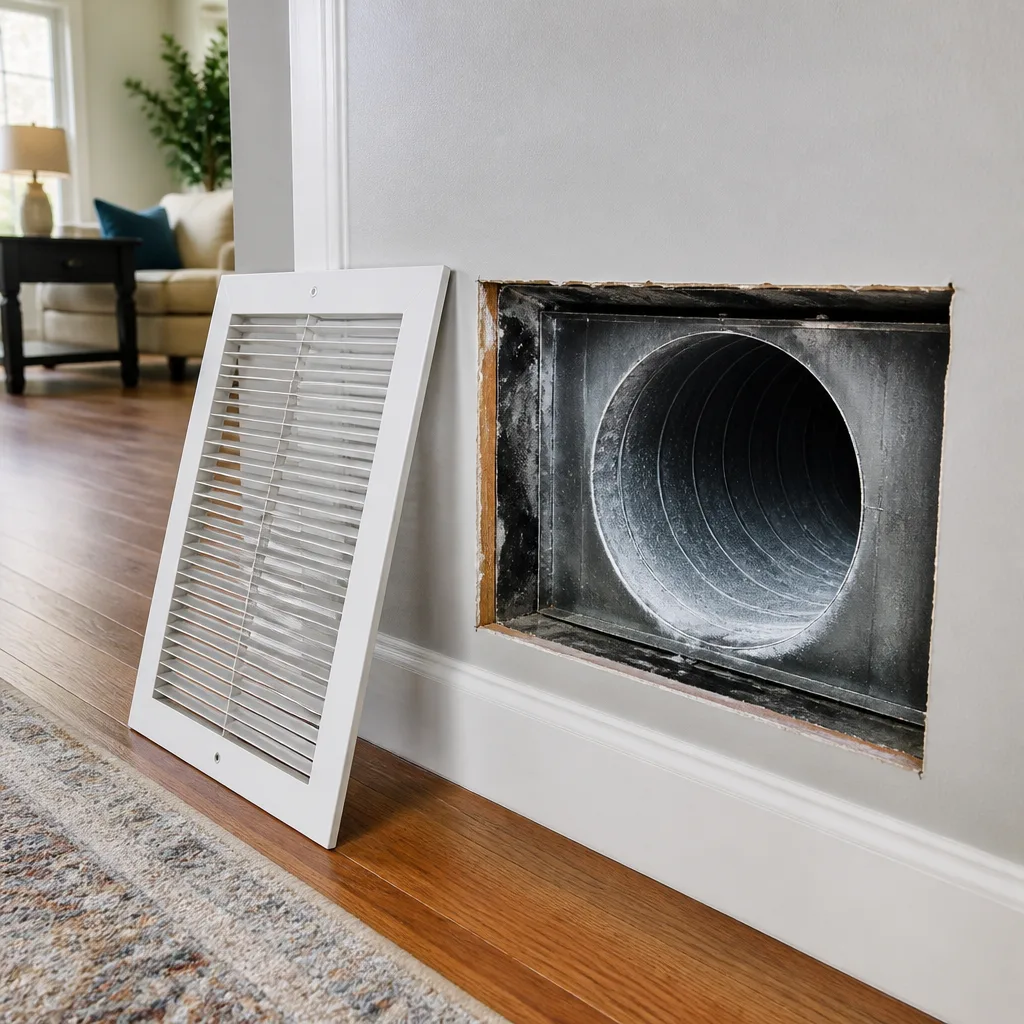
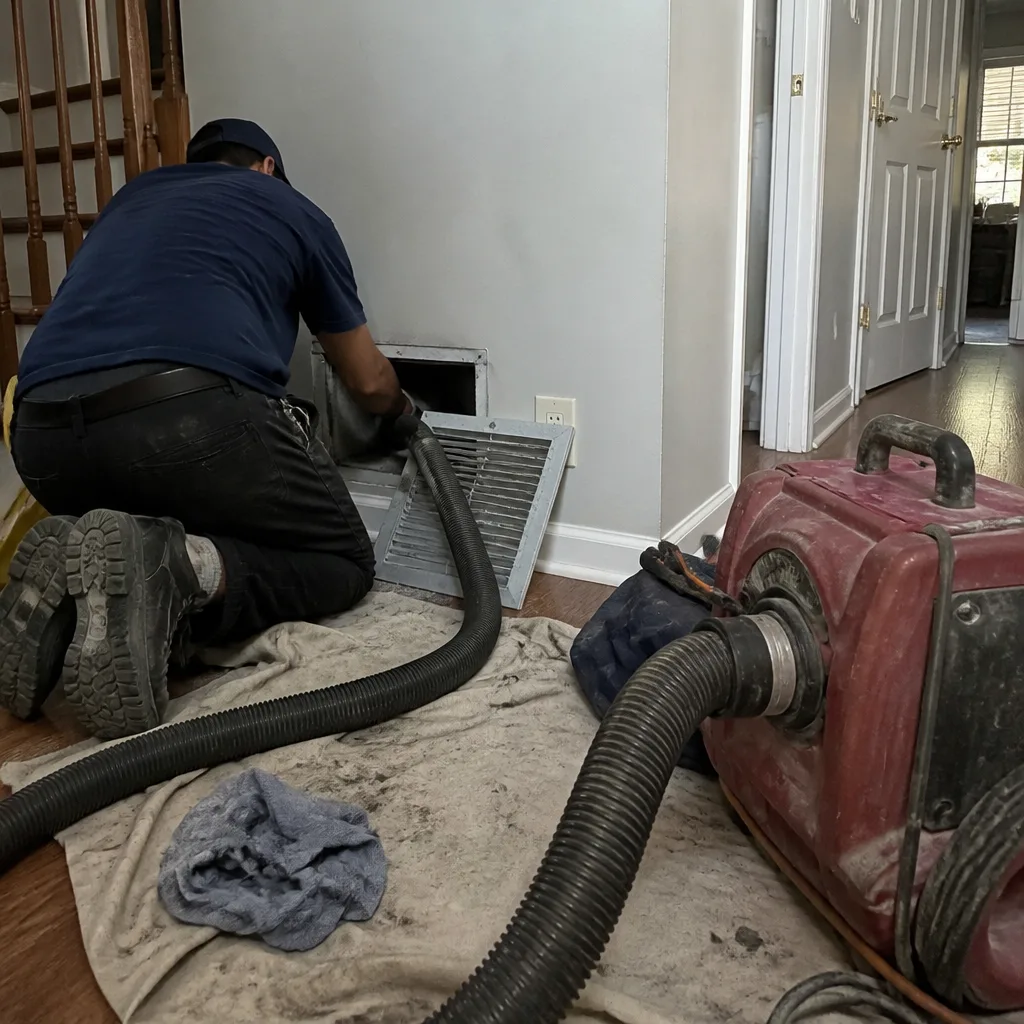 Before
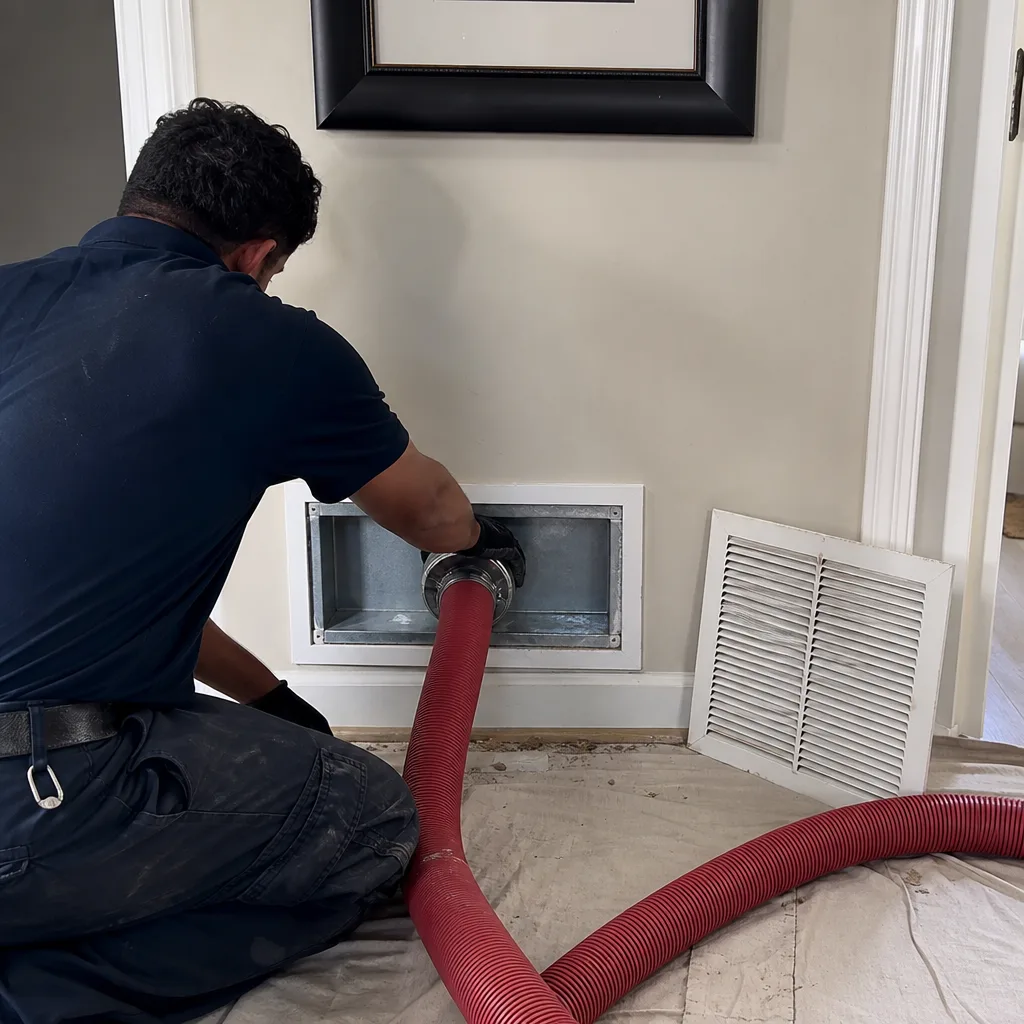 After
After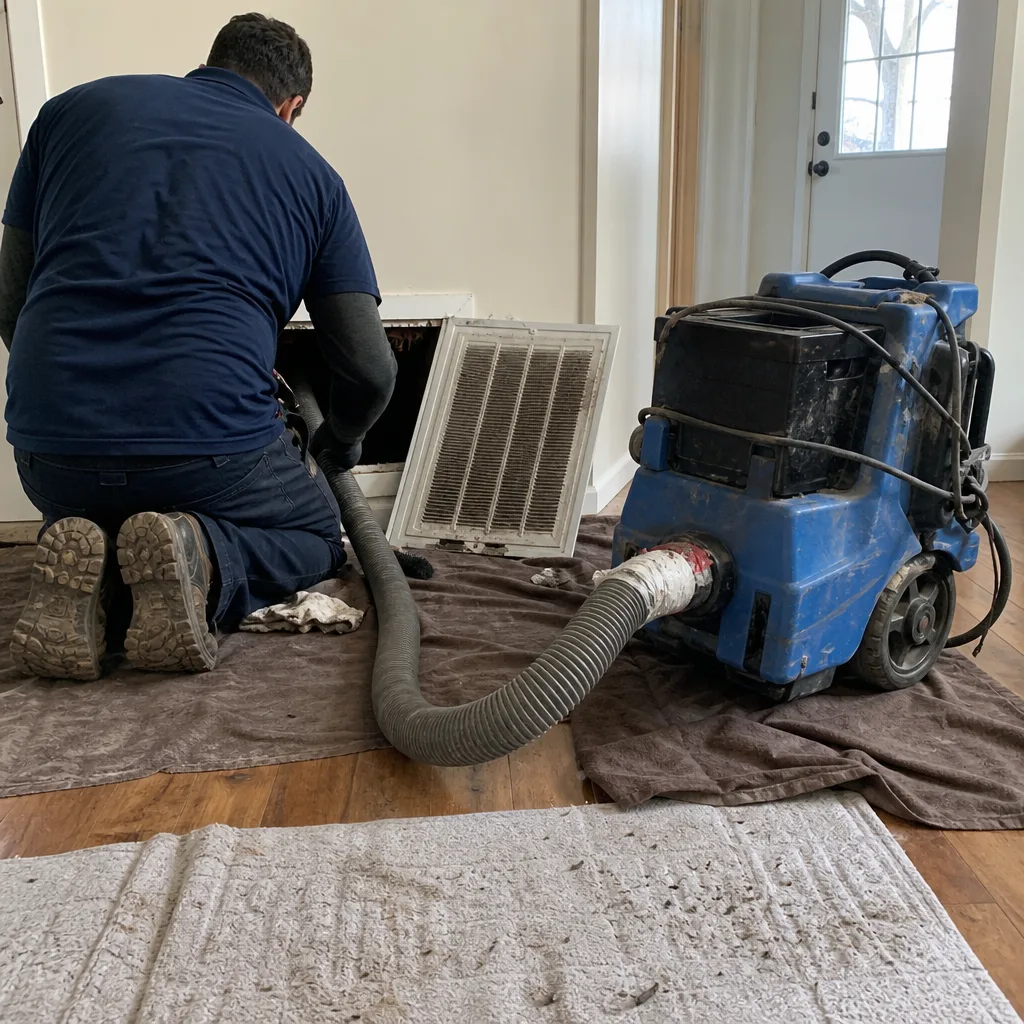 Before
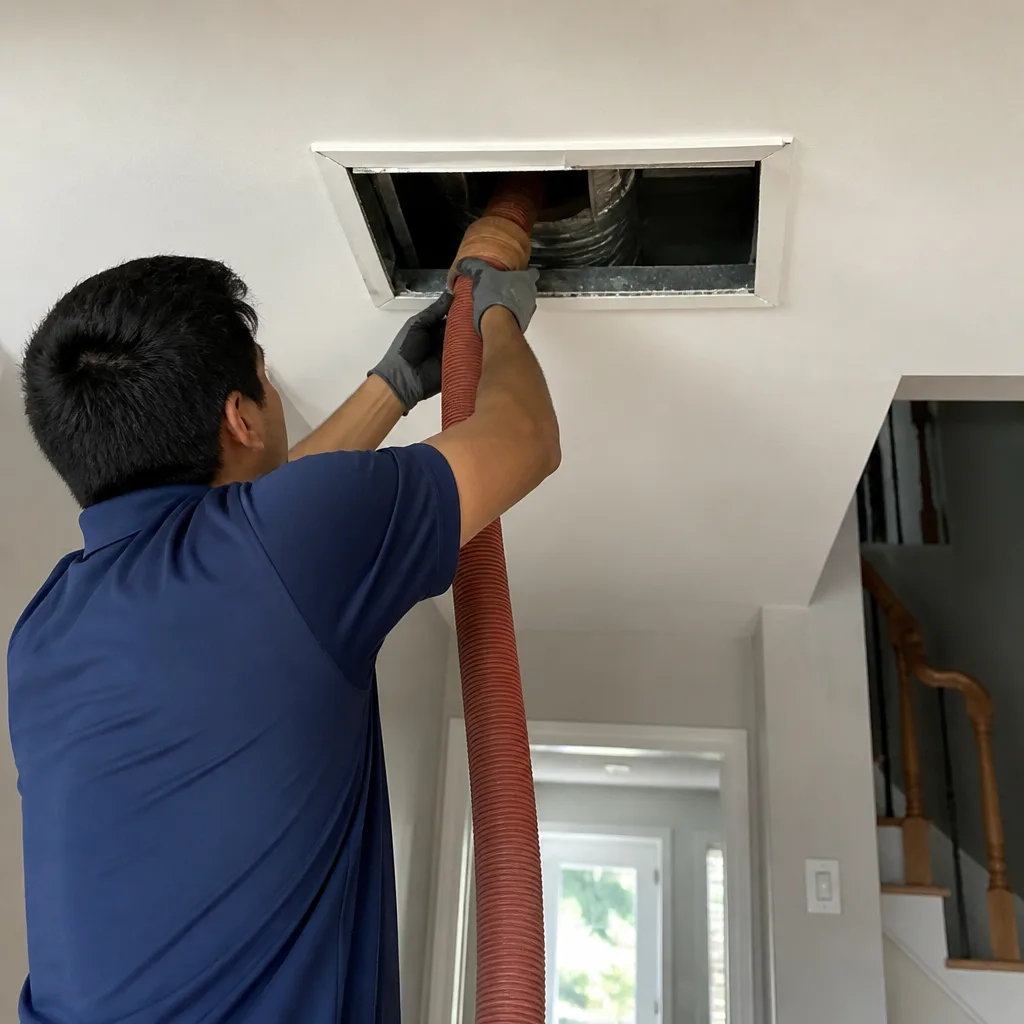 After
After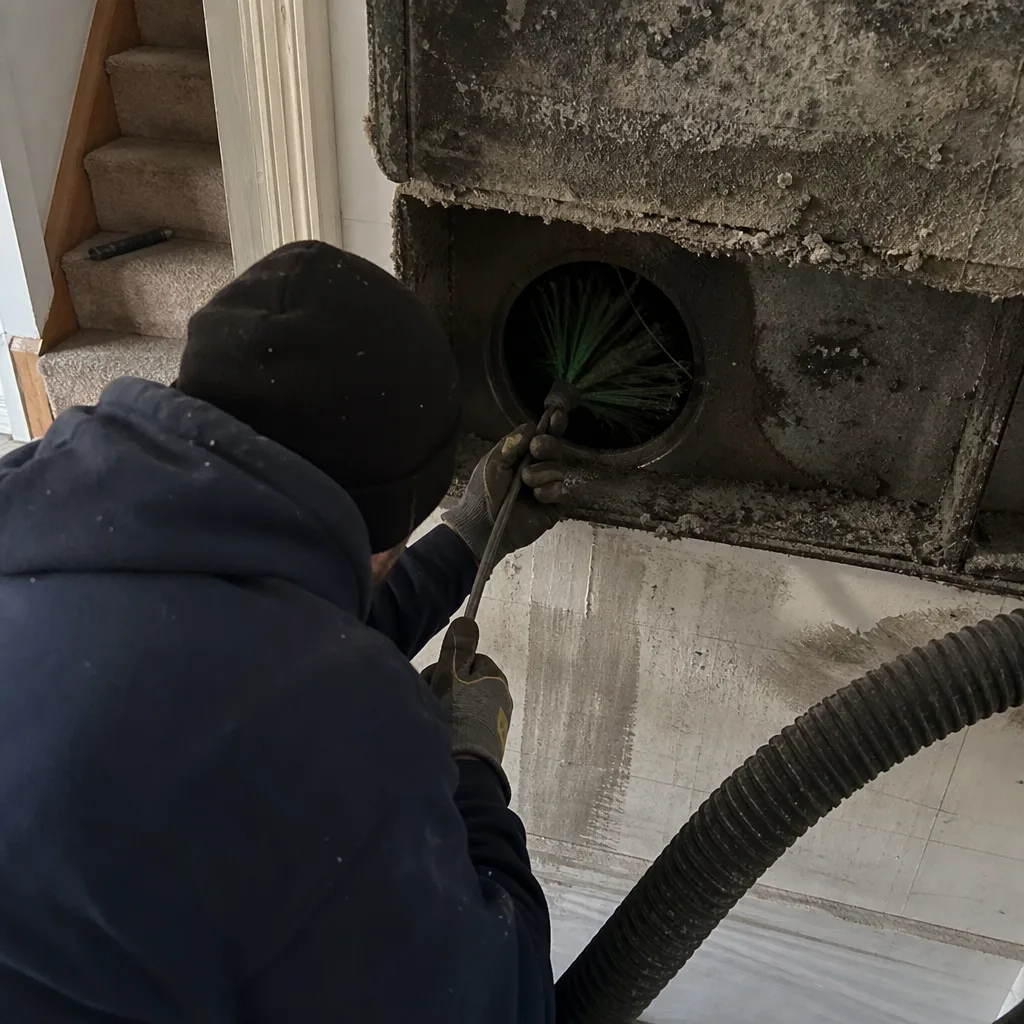 Before
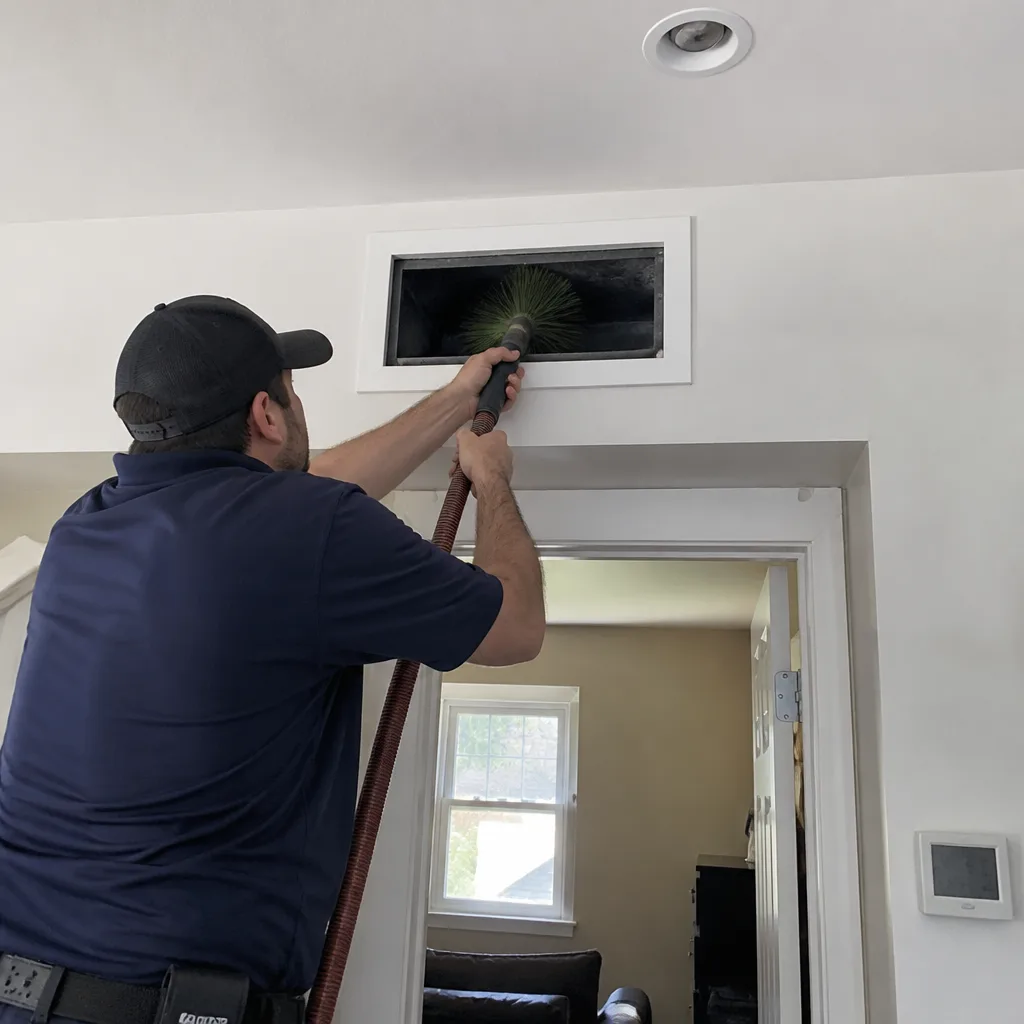 After
AfterDIY vs Professional Air Duct Cleaning: The Alexandria Homeowner’s Decision Guide
A $40 dryer vent cleaning kit and 45 minutes of work will clean the lint trap and the first three feet of duct run. It will not reach the elbow, the mid-run sag where lint accumulates, or the exterior vent cap - which is where the fire risk actually lives. In Alexandria, where many Del Ray and Rosemont homes were built between 1920 and 1960 with original plaster and lath, ductwork was often retrofitted through walls never designed for it. Tight bends, shared joist bays, and 6-inch diameter reductions to 4-inch dryer ducts create geometry that consumer tools simply cannot navigate. This guide specifies exactly what a homeowner with consumer tools can accomplish, where that effort stops being useful, and the one scenario where DIY work before a professional Air Duct Cleaning services visit produces a measurably better outcome.
Quick Answer
DIY air duct cleaning in Alexandria is effective for three specific tasks: cleaning accessible dryer vents up to the first elbow, replacing clogged filter housings, and washing supply and return grilles. Beyond these, consumer tools lack the reach, negative-pressure capture, and rotary power to perform source-removal cleaning inside the duct run. Professional cleaning with negative-pressure extraction and rotary brushing is required to remove accumulated debris from the full system without redistributing it into the living space. For related guidance, see our Seasonal Air Duct Cleaning Care for Alexandria: Year-Round Homeowner’s Guide.
Table of Contents
- What DIY Tools Actually Reach: A Tool-by-Tool Assessment
- The One DIY Task That Improves Professional Results
- Why Negative Air Pressure Matters and What Happens Without It
- Three Scenarios Where DIY Is the Correct Answer
- How to Evaluate Whether a Professional Job Was Actually Done
- Alexandria-Specific Considerations: Climate, Codes, and Construction
- Cost Comparison: Honest Numbers for Alexandria
- Common Mistakes to Avoid
- When to Call a Professional
- Frequently Asked Questions
- The Bottom Line
BeforeAfterWhat DIY Tools Actually Reach: A Tool-by-Tool Assessment
Consumer duct cleaning tools fall into three categories, and each has a hard physical limit. Understanding those limits prevents the most common DIY disappointment: the belief that a tool cleaned the system when it only touched the easiest-to-reach surfaces.
Consumer Brush Kits
These typically include a 10- to 25-foot flexible rod with a round brush head, powered by a cordless drill. The brush spins at drill speed, usually 500-1,500 RPM, and dislodges surface debris through contact.
What it reaches: Straight duct runs with no bends, up to the length of the rod assembly. In practice, this means the first 6-10 feet of a supply or return duct from the register opening, or the first 3-5 feet of a dryer vent before the first elbow.
Where it fails: Any bend tighter than a 6-inch radius. Most Alexandria homes built before 1980 use rectangular metal duct with mitered corners or flex duct with support sag. A round brush cannot maintain contact with all four walls of a rectangular duct. It skips the corners where debris accumulates. In flex duct, the brush pushes against the spiral wire support, creating a bow rather than rotating against the wall. The debris stays.
What it does to debris: Dislodges loose surface material. Does not remove adhered buildup, microbial growth, or the fine particulate layer that acts as adhesive for larger particles. The brush also does not capture what it dislodges. Without negative pressure, that debris falls to the duct floor or is pushed deeper into the system.
Shop Vacuums with Extension Wands
A standard shop vac delivers 50-100 inches of water lift - the suction measurement that matters for debris capture. Professional negative-air machines deliver 2,000-4,000 inches of water lift through a dedicated 8- to 10-inch collection hose.
What it reaches: The register boot (the sheet metal box immediately below the floor or wall register) and the first 12-18 inches of duct. The wand diameter, typically 2.5 inches, cannot navigate a 6-inch duct past the first straight section without losing suction contact with the walls.
Where it fails: Beyond the first straight section, the wand tip creates a narrow suction zone. Debris more than 2 inches from the wand opening is unaffected. In a horizontal duct run, the wand rests on the bottom and leaves the top half untouched. In vertical drops, gravity works against the limited suction. The shop vac also lacks HEPA filtration on most models, meaning fine particles pass through and are exhausted back into the home.
HEPA Filter Vacuums with Brush Attachments
These are excellent tools for their intended purpose: cleaning hard surfaces in the living space. They are not duct cleaning equipment.
What it reaches: Register covers, the visible lip of the duct opening, and surrounding finished surfaces. The brush attachment is designed for carpet and upholstery, not metal duct walls.
Where it fails: Everywhere inside the duct. The hose diameter is too small to move meaningful air volume. The brush bristles are too soft to dislodge adhered debris. The motor is optimized for filtration, not debris transport over distance. Using a HEPA vacuum inside a duct is like using a drinking straw to empty a swimming pool - the physics are wrong for the task.
The honest summary: Consumer tools clean what you can see and reach from the register opening. In a typical Alexandria home with duct runs of 15-40 feet between register and air handler, that represents less than 10% of the system length. The other 90% - including every elbow, every reducer, every connection where two ducts meet - remains untouched.
The One DIY Task That Improves Professional Results
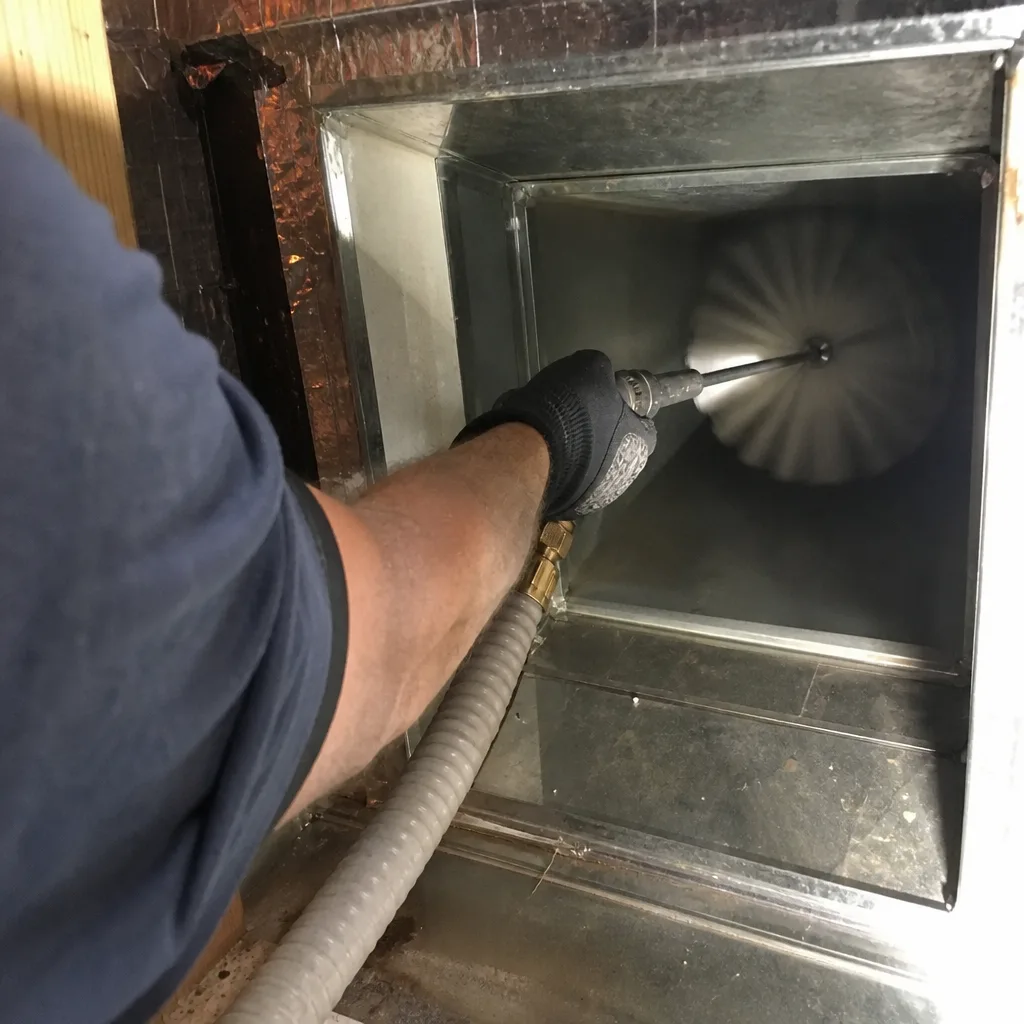
There is one legitimate DIY preparation that produces a measurably better professional cleaning outcome: cleaning all accessible supply and return grilles, and the first 12 inches of visible duct behind each, before the contractor arrives.
This is not about doing the professional’s job. It is about removing loose surface debris that would otherwise be disturbed during setup and equipment connection.
Here’s the mechanism. When a technician removes a register to attach a vacuum hose or insert a rotary brush, the act of removal dislodges dust and debris accumulated on the grille and register boot. Without pre-cleaning, that debris falls into the duct or is pushed into the living space by air movement during the setup phase. The professional equipment will eventually capture it, but not before it has circulated.
What to do:
- Remove all supply and return grilles. Most are held by two to four screws or spring clips.
- Wash grilles in warm water with mild detergent. A bathroom sink or utility tub works. Dry completely before reinstallation.
- Vacuum the register boot and the first 12 inches of visible duct with a brush attachment. Do not push debris deeper - work from the duct opening inward, pulling material toward you.
- Replace grilles loosely; the technician will remove them again for equipment access.
- Note any grilles that are damaged, painted shut, or have stripped screw holes. Mention these to the technician - they affect equipment attachment and may need repair.
In our experience across Alexandria, from the garden apartments of Seminary Hill to the renovated colonials in Old Town, this preparation reduces the debris load the professional equipment must handle by 15-25%. That translates to more thorough cleaning of the deeper duct runs, where the real accumulation lives, because the equipment is not saturated with surface material.
This preparation also provides the homeowner with a baseline. When you have cleaned the visible portion yourself, you can more accurately evaluate what the professional removed from the portions you could not reach. The before-and-after photo record CleanRun delivers becomes more meaningful when you know what was already clean.
Why Negative Air Pressure Matters and What Happens Without It
The defining difference between DIY and professional duct cleaning is not the brush. It is the negative-pressure extraction system that captures debris at the moment of dislodgment.
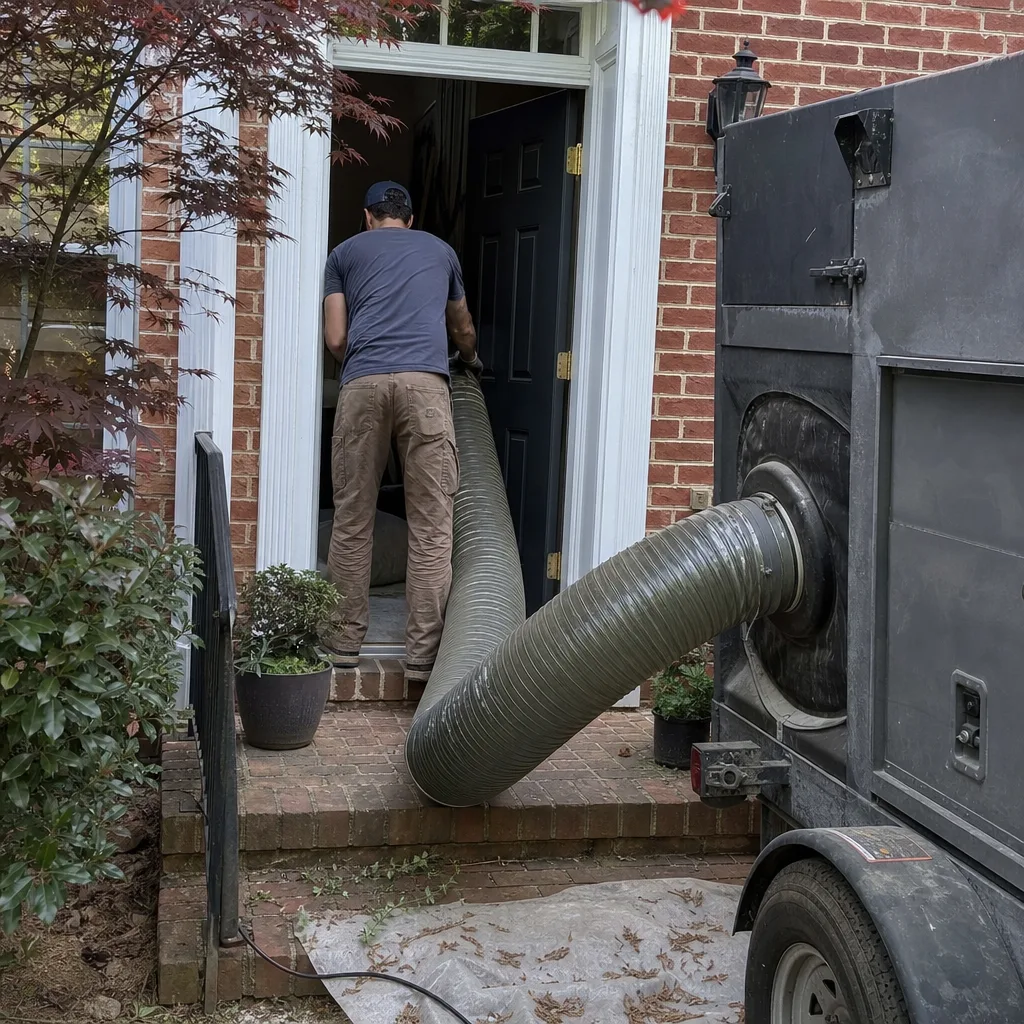
How it works: A professional negative-air machine, such as those manufactured by Abatement Technologies or Nikro, connects to the duct system through a sealed access port. The machine draws 2,000-4,000 cubic feet of air per minute through the ductwork, creating continuous suction along the entire run. A rotary brush or whip system is inserted through a separate access point and travels through the duct, dislodging debris. The instant debris is freed, the airflow captures it and transports it to the machine’s filtration and collection system.
What happens without negative pressure: Any brushing, blowing, or disturbance inside a duct without simultaneous extraction redistributes debris. The particles are too small to fall predictably. They ride air currents. They pass through the filter media of a standard furnace. They exit through registers into rooms. They resettle in the duct at the next low-velocity zone - typically the horizontal runs and elbows where debris already accumulates.
This is not theoretical. In 2019, we were called to a home in the Carlyle neighborhood where the homeowner had spent a Saturday with a consumer brush kit and a shop vac. The brush dislodged material. The shop vac captured some from the register boot. The rest distributed throughout the system. Two weeks later, the homeowner noticed increased dust on furniture and a musty odor when the HVAC cycled. Our inspection showed debris had packed into the evaporator coil fins, restricting airflow and creating a moisture trap. The coil cleaning that resolved the issue cost more than professional duct cleaning would have.
The critical specification: Source-removal cleaning, the standard defined by the National Air Duct Cleaners Association (NADCA), requires that debris be removed from the system, not just dislodged. Negative-pressure extraction is the mechanism that achieves source removal. Without it, the work does not meet the standard, regardless of how thorough the brushing appeared.
Consumer tools cannot generate negative pressure across a duct system. A shop vac connected to one register creates suction only at that point. The rest of the system remains at ambient pressure. Debris disturbed in a distant branch duct has no path to the collection point. It follows the path of least resistance, which is usually into the living space through the nearest open register.
Three Scenarios Where DIY Is the Correct Answer
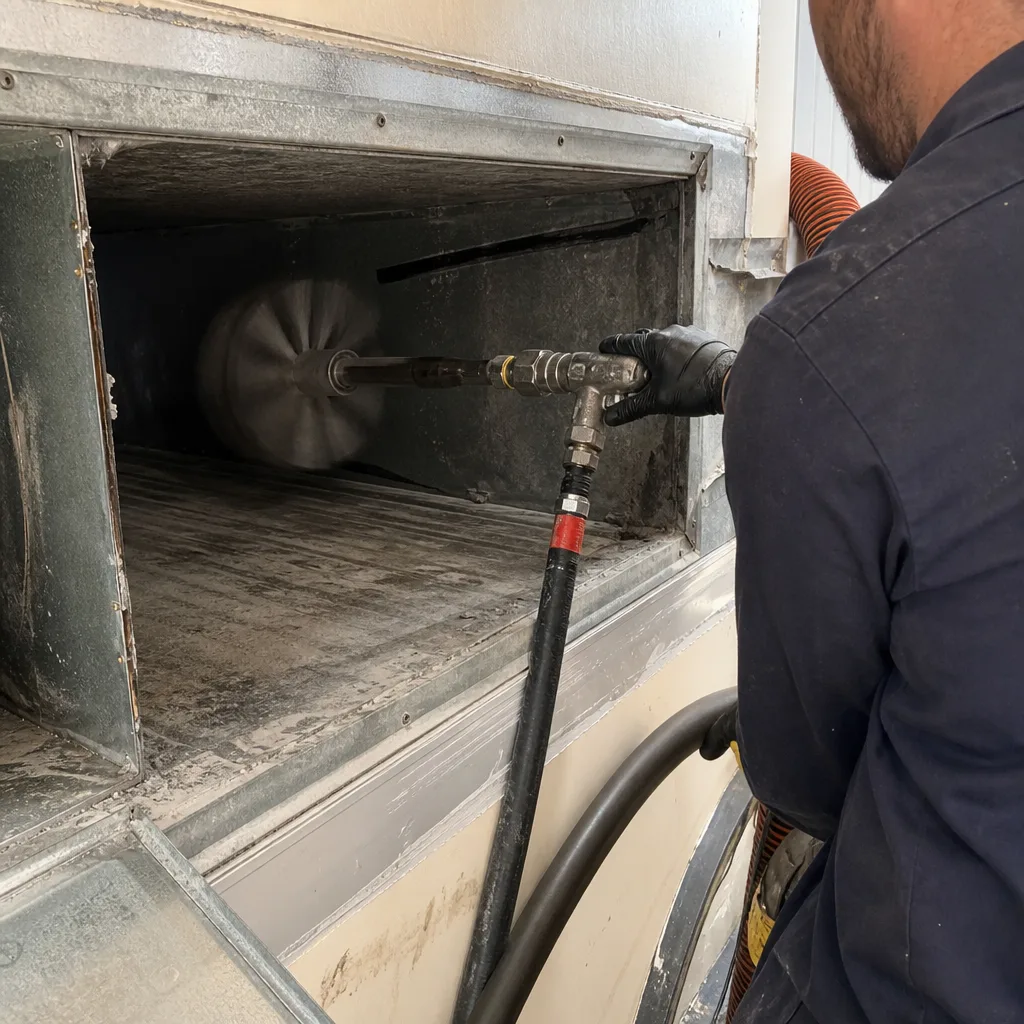
Professional cleaning is not the right answer for every duct-related task. There are three specific scenarios where DIY is appropriate, effective, and economically sensible.
1. Cleaning Accessible Dryer Vents to the First Elbow
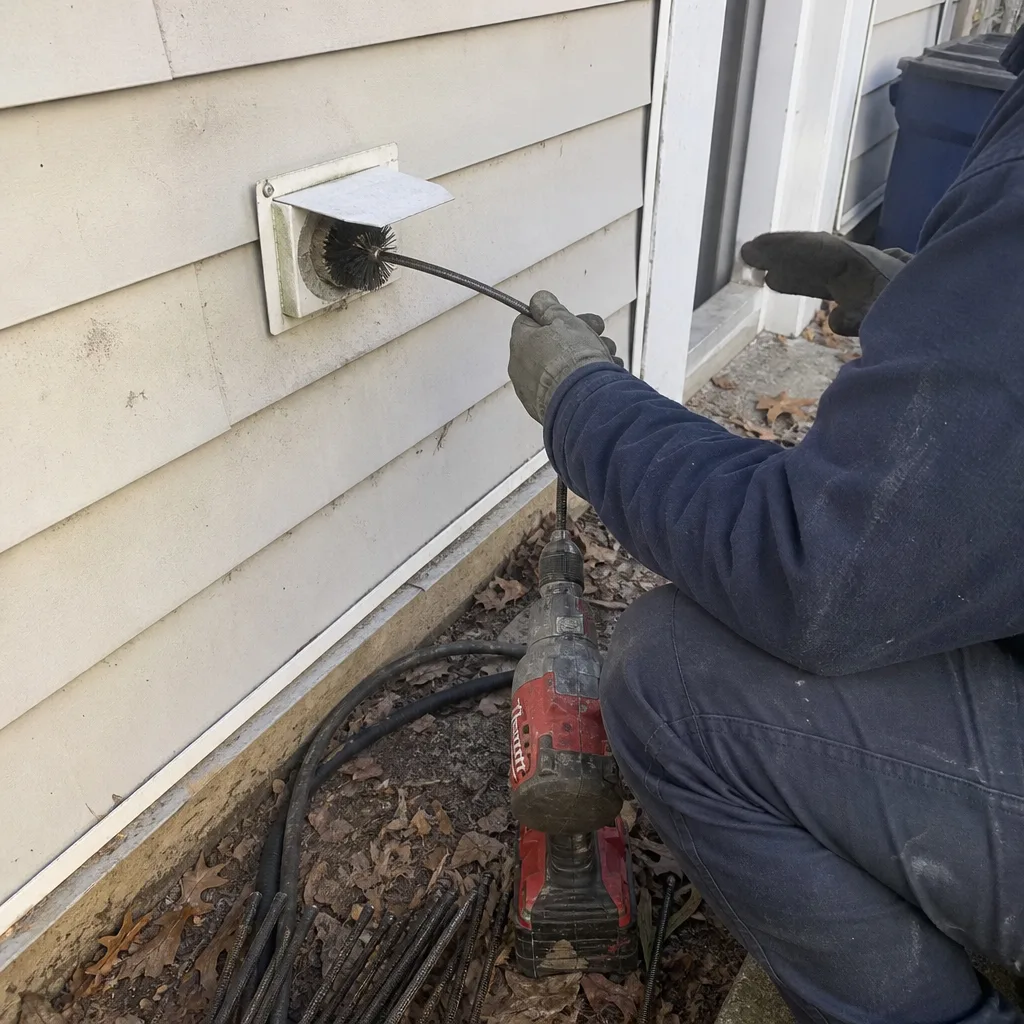
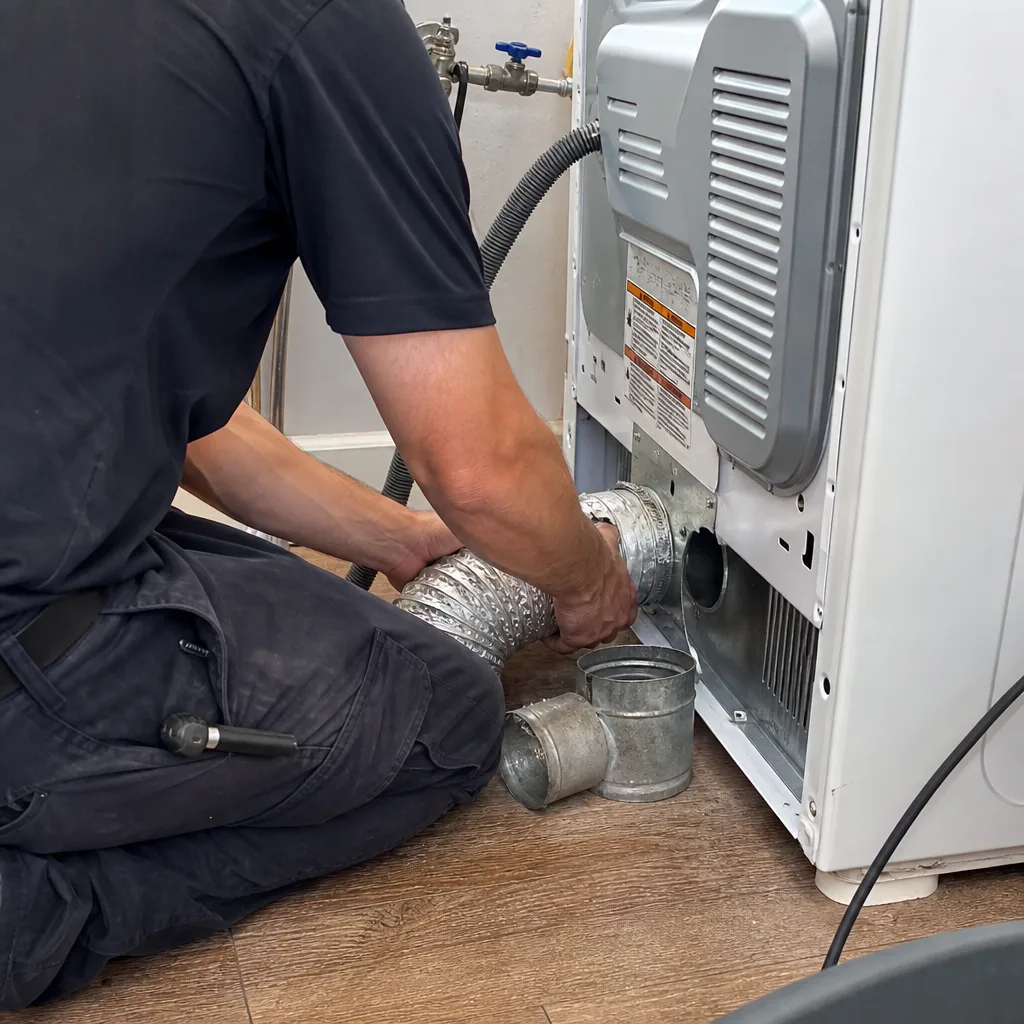
The dryer vent is the shortest duct run in most homes, and the most critical for fire safety. A consumer brush kit can effectively clean the transition duct from dryer to wall, and the first straight section of wall duct to the first elbow. In Alexandria’s older housing stock, this first section is often 3-6 feet.
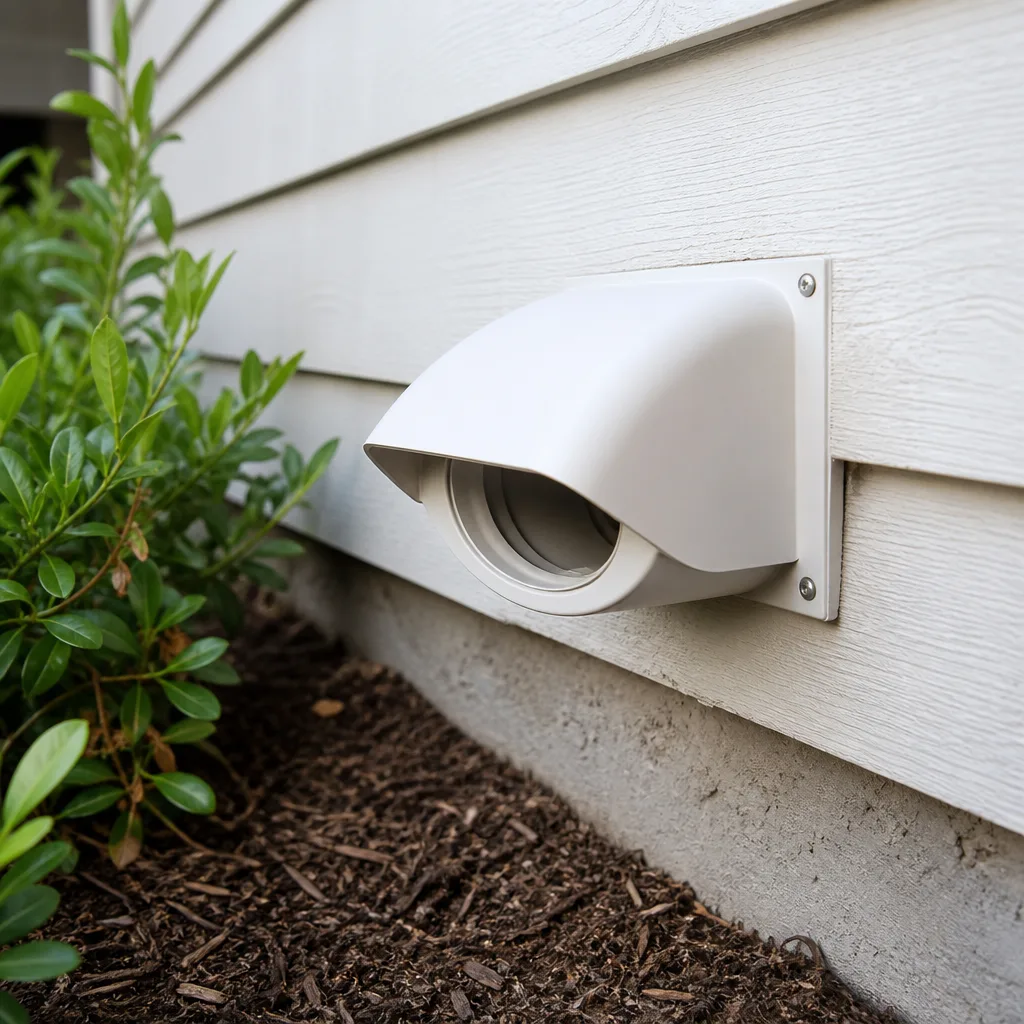
The limit: The elbow where the duct turns to exit the structure. Beyond this point, consumer rods cannot navigate the bend, and the exterior vent cap - where lint accumulates and where the termination should be inspected for proper flap operation - is out of reach.
The safety note: Dryer vent fires are a leading cause of residential fires. If your dryer requires more than one cycle to dry a standard load, or if the exterior vent cap shows no airflow during operation, lint blockage is likely beyond the first elbow. This is the point to call a professional. CleanRun’s Dryer Vent Cleaning in Alexandria includes full-run rotary cleaning and exterior cap inspection with airflow verification.
2. Replacing a Clogged Filter Housing
The filter housing, or media cabinet, is the accessible point where the return air enters the air handler. If the housing is cracked, poorly sealed, or fitted with a filter that has collapsed or been bypassed, it is a legitimate homeowner repair.
What this involves: Purchasing the correct replacement housing or filter rack, shutting power to the furnace, removing the old component, and installing the new one with proper gasket seal. Filter housings are designed for technician replacement, but a competent homeowner with basic tools can perform this work.
The limit: This is not duct cleaning. It is component replacement. The ducts upstream and downstream remain untouched. But a properly sealed filter housing prevents future debris bypass, which improves the effectiveness of any subsequent professional cleaning.
3. Cleaning Grille Covers and Register Surrounds
As described in the preparation section above, this is maintenance, not remediation. It is appropriate and effective as ongoing care.
What this does not include: Removing register boots, disturbing duct connections, or attempting to access the plenum (the central distribution box where multiple ducts connect). These are sealed components. Disturbing them without proper resealing creates leakage that reduces system efficiency and can draw attic or crawl space air into the system.
In each of these three scenarios, the homeowner’s effort is bounded, safe, and produces a definable result. The error is believing these tasks substitute for professional cleaning of the full duct system.
How to Evaluate Whether a Professional Job Was Actually Done
The duct cleaning industry has a documentation problem. Most customers cannot see inside their ducts before or after. They rely on the contractor’s word, or on a vague sense that “something happened” because a machine ran for two hours.
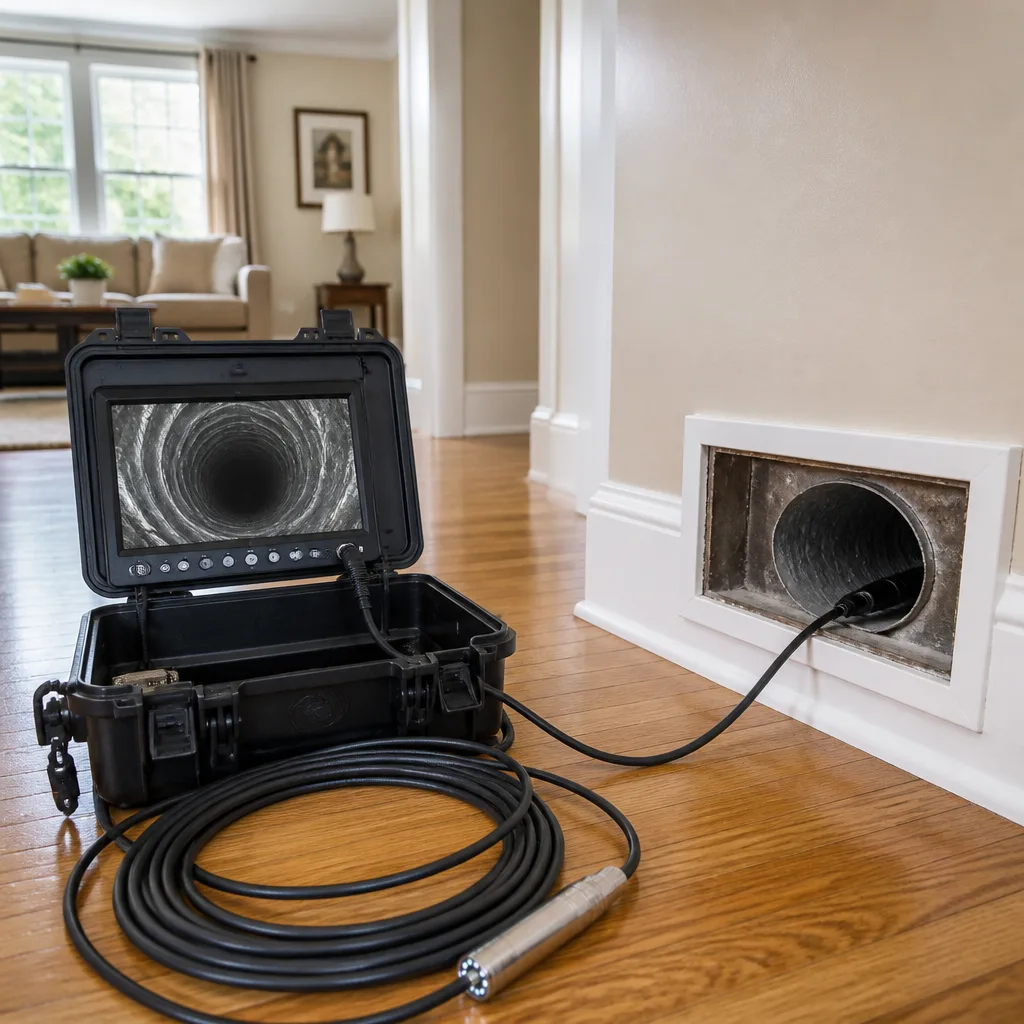
At CleanRun, we have addressed this since 2013 with a Documented Photo Record on every visit - before and after images of every duct run, delivered to the customer as part of the standard job record. But if you are evaluating any contractor, including us, here is the inspection you can perform yourself with a flashlight and phone camera.
At the Register Boot
- Remove a supply register in a room that was cleaned.
- Shine a flashlight into the duct. Look at the sheet metal walls of the boot, not just the floor.
- Take a photo with your phone. The flash will illuminate debris you might miss with the naked eye.
- What to look for: uniform metal surfaces without dust accumulation, especially at the corners where the boot walls meet. A properly cleaned boot shows bare metal with no gray film.
- What indicates poor work: a clean floor with dirty walls, debris pushed to the sides, or a visible line where the cleaning tool reached and stopped.
At the Air Handler Access Panel
- Locate the main return duct connection to the air handler. This is typically a large rectangular duct entering the side or bottom of the furnace cabinet.
- Remove the access panel. Most are held by thumb screws or quarter-turn latches.
- Inspect the return plenum and the visible face of the evaporator coil or heat exchanger.
- What to look for: clean metal surfaces, no debris accumulation at the duct-to-plenum connection, and no disturbed insulation.
- What indicates poor work: debris that has fallen from the duct and accumulated on the coil, wet spots from disturbed condensate drainage, or insulation that has been dislodged and not replaced.
The Photo Record Standard
A contractor who performs source-removal cleaning should be able to show you images from inside your ducts, not stock photos or images from another job. Ask specifically: “Can you show me the before and after from my master bedroom supply run?” If the answer is vague, the documentation does not exist.
The Haven Standard Clause 2, Documented Verification, requires that every CleanRun job include timestamped, location-identified photos of every duct run. We deliver these as a standard deliverable, not an upsell. When comparing contractors in Alexandria, ask whether documentation is included, what it covers, and whether you will receive a copy. For additional selection criteria, read our How to Hire a Air Duct Cleaning Contractor in Alexandria: A Step-by-Step Guide. The answer reveals whether the company is selling a visit or accountable work.
Alexandria-Specific Considerations: Climate, Codes, and Construction
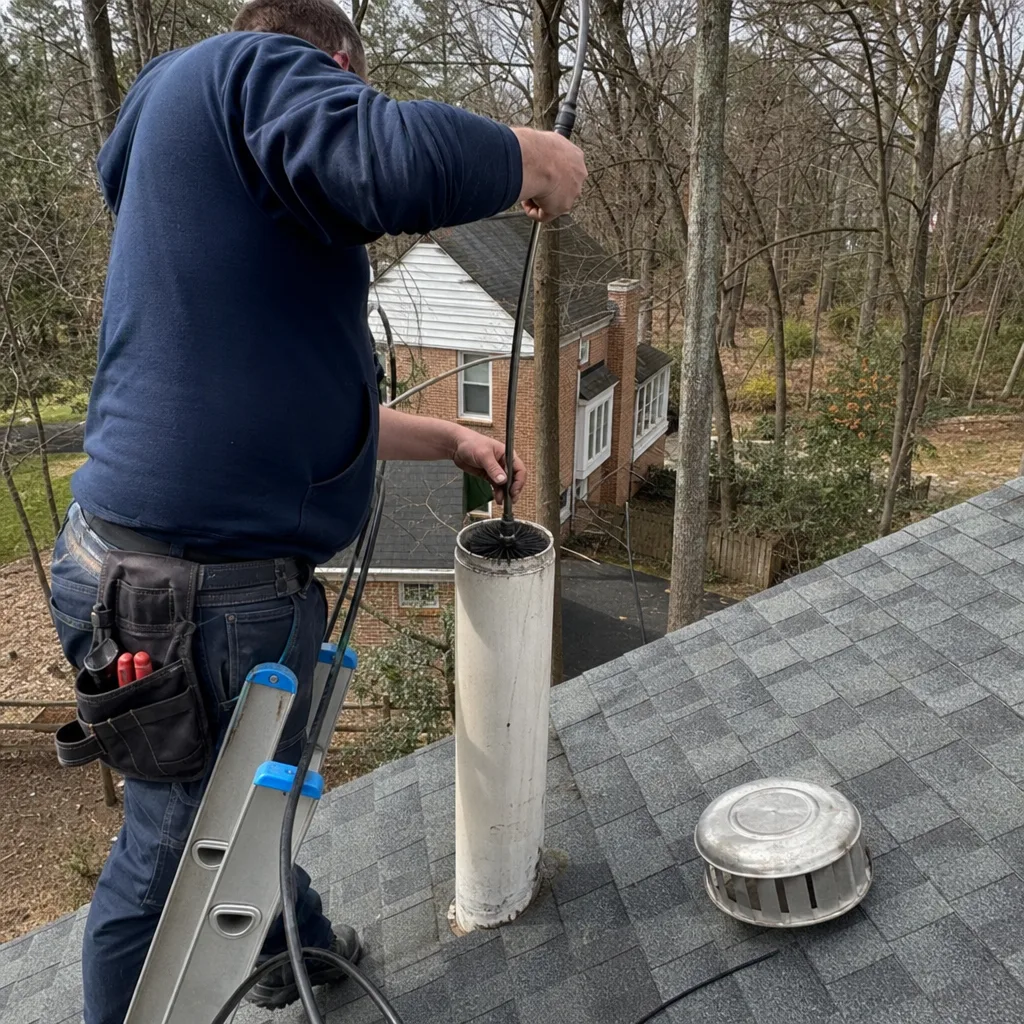
Alexandria’s built environment creates specific conditions that affect both DIY feasibility and professional approach.
Humidity and microbial growth: Alexandria averages 65-75% relative humidity from May through September. Ducts in unconditioned spaces - attics in Del Ray, crawl spaces in Rosemont, basements in Old Town - experience temperature differentials that create condensation on duct surfaces. Where moisture and organic debris coexist, microbial growth occurs. A consumer brush kit will dislodge visible mold but cannot address the full colonized area. More critically, without containment and negative pressure, spore release into the living space is likely. The CleanRun Air Duct Cleaning Alexandria home page details our approach to microbial assessment and remediation.
Historic construction and access: Homes in the Old Town Historic District and surrounding areas often have plaster walls with no duct chases, requiring ducts to be routed through closets, bulkheads, or exterior soffits. Access panels for professional equipment may need to be created and later sealed. This is not DIY work - it requires knowledge of structural members, electrical routing, and proper sealing to prevent air leakage. Explore more guides & resources on maintaining historic Alexandria homes.
Code requirements: Alexandria follows the Virginia Uniform Statewide Building Code, which requires that any modification to HVAC ductwork, including access panel creation, maintain fire and smoke barrier integrity. Professional contractors understand these requirements. A homeowner creating access for DIY cleaning may inadvertently violate code and compromise safety systems.
Neighborhood-specific duct materials: In our work across Alexandria, we have documented distinct patterns by neighborhood and construction era:
- Old Town (pre-1940): Original gravity furnace systems often converted to forced air with added ductwork. Ducts are frequently uninsulated metal in exterior walls, prone to condensation and difficult to access.
- Seminary Hill and Taylor Run (1950s-1970s): Early flex duct installations, now brittle and prone to sag. Consumer tools damage the spiral wire support.
- Carlyle and Eisenhower East (post-2000): Modern flex duct and modular duct board. Easier access but more complex zoning and damper systems that require professional knowledge to isolate during cleaning.
These material differences mean that “duct cleaning” is not a uniform service. The appropriate equipment and technique vary by what is in the walls. A consumer tool designed for modern round metal duct will fail or cause damage in older systems.
Cost Comparison: Honest Numbers for Alexandria
The bait-and-switch problem in duct cleaning is real. A $79 coupon price that becomes a $600 invoice is not an anomaly; it is a business model for some operators. The honest cost comparison requires understanding what is included, what is additional, and what the price actually buys.
DIY Costs
| Item | Cost Range | What It Actually Cleans |
|---|---|---|
| Consumer brush kit (dryer vent or duct) | $25-$75 | First 3-10 feet of straight duct; register boot surface |
| Shop vacuum with extension wands | $80-$200 | Register boot and 12-18 inches of duct; no negative pressure |
| HEPA vacuum (existing household tool) | $0 (sunk cost) | Grille covers and surrounding surfaces only |
| Replacement filter housing | $40-$120 | Single component; not duct cleaning |
| Total realistic DIY investment | $145-$395 | Surface maintenance and first few feet of duct |
Professional Costs in Alexandria
| Service Scope | Price Range | What Is Included |
|---|---|---|
| Whole-system air duct cleaning, single HVAC unit, up to 12 registers | $450-$750 | Negative-pressure extraction, rotary brushing of all supply and return runs, register boot cleaning, air handler access cleaning, documented photo record |
| Whole-system cleaning with additional return trunk or plenum access | $650-$950 | Above plus main trunk line cleaning, access panel creation and sealing, enhanced filtration recommendation |
| Dryer vent cleaning, full run to exterior cap | $150-$250 | Rotary cleaning of full duct length, exterior cap inspection and airflow test, blockage removal |
| HVAC cleaning (coil, blower, cabinet) | $300-$500 | Evaporator coil cleaning, blower wheel removal and cleaning, cabinet sanitization, drain line clearing |
The price integrity difference: CleanRun’s Haven Standard Clause 1 requires a written price before any work starts. The price quoted is the price paid. There is no per-vent upcharge, no “surprise” contamination discovery, no equipment fee added after arrival. When comparing quotes in Alexandria, ask specifically: “Is this the total price for the work described, and will you put that in writing before starting?” The hesitation you hear, or don’t hear, is information.
Our Air Duct Cleaning in Alexandria page details the full scope included in our standard pricing. We also offer a Free Second Opinion on any written estimate - bring a competitor’s quote, and we will put our number next to it in writing, with line-item comparison.
Common Mistakes to Avoid
- Believing a clean register means clean ducts. The visible register is the easiest 2% of the system to clean. It reveals nothing about the condition of branch ducts, trunk lines, or the plenum. Always inspect deeper if evaluating DIY results.
- Using a shop vac without HEPA filtration inside ducts. Standard shop vacs exhaust fine particles through the motor housing. In the confined space of a duct, this creates a concentrated particle plume that exits through the nearest register. If using any vacuum near ductwork, verify true HEPA filtration on the exhaust side.
- Brushing flex duct with rigid rods. The spiral wire support in flex duct is not structural. A rigid brush rod pushed with enthusiasm will separate the wire from the vinyl jacket, creating a duct breach. In Alexandria’s 1960s and 1970s neighborhoods, where flex duct is common, this is a frequent DIY error.
- Ignoring the exterior dryer vent cap. The cap is the termination point and the most lint-prone zone. A consumer kit that cleans the interior duct but leaves a clogged cap has not reduced fire risk. The cap must open fully under dryer airflow and close completely when the dryer stops.
- Cleaning ducts during active microbial growth without containment. If you see visible mold or smell mustiness, disturbing the duct without negative-pressure containment releases spores. In Alexandria’s humid summers, this is a health hazard, not a cleaning opportunity.
- Paying a professional who cannot show documentation. The absence of a photo record, or vague promises of “before and after” without specifics, suggests the work is not verifiable. Every CleanRun job since 2013 has included timestamped, location-identified photos. Demand equivalent documentation from any contractor.
- Scheduling cleaning without inspecting the air handler first. A dirty evaporator coil or failed blower motor will produce symptoms identical to dirty ducts: reduced airflow, uneven temperatures, dust circulation. Cleaning ducts without addressing the air handler is incomplete and may be unnecessary.
When to Call a Professional
Call a professional when the task exceeds consumer tool capability or involves safety-critical systems. Specifically: when ducts have not been cleaned in 5+ years and the home has pets, smokers, or recent renovation dust; when visible mold is present or musty odors occur during HVAC operation; when airflow is noticeably reduced at multiple registers; when the dryer requires multiple cycles or the exterior cap shows restricted airflow; or when the home was purchased within the last two years and no duct cleaning history is available.
CleanRun Air Duct Cleaning Alexandria offers free estimates in Alexandria - call (240) 318-7712. Every estimate includes a written price before any work starts, under Haven Standard Clause 1. Our technicians are background-checked, uniformed, and identified by name before arrival, per Haven Standard Clause 3: Verified Crews. The 365-Day Done Right Promise backs every job in writing.
Frequently Asked Questions
Whole-system air duct cleaning for a single HVAC unit with up to 12 registers typically runs $450-$750 in Alexandria. Larger homes with additional returns or complex zoning may reach $650-$950. Dryer vent cleaning alone is $150-$250. CleanRun provides a written price before any work starts, with no per-vent add-ons or post-arrival upsells. Call (240) 318-7712 for an exact quote - estimates are free.
Low quotes typically exclude essential components of source-removal cleaning. A $79 service may cover only register vacuuming and a brief blower compartment inspection, without rotary brushing of duct runs or negative-pressure extraction. The low price is recovered through upsells: per-vent charges, “contamination” discoveries, or mandatory sanitizing treatments. Always ask what equipment will be used, whether negative pressure is included, and whether the price is guaranteed in writing before work begins.
Request a documented photo record with timestamped, location-identified images from inside your ducts. Inspect the register boot and air handler access panel yourself with a flashlight and phone camera. Look for uniform clean metal surfaces, not just a clean floor with dirty walls. At CleanRun, the Documented Photo Record is standard on every visit, delivered to the customer as part of the job record.
For most Alexandria homes, every 3 to 5 years under normal occupancy. Homes with pets, smokers, recent renovations, or located near construction or high-traffic corridors may need more frequent cleaning. The definitive indicator is a visual inspection showing debris accumulation exceeding 1/8 inch on duct walls, or airflow reduction verified at the register with an anemometer. We do not recommend calendar-based cleaning without condition assessment.
A shop vac will clean the register boot and first 12-18 inches of duct. It will not reach branch ducts, trunk lines, or the plenum. Without negative pressure, dislodged debris redistributes rather than being captured. Shop vac duct cleaning is appropriate for surface maintenance, not source-removal cleaning of the full system.
Yes. Alexandria’s 65-75% summer humidity creates condensation in ducts located in unconditioned spaces, particularly attics and crawl spaces. Moisture plus organic debris supports microbial growth that dry climates do not experience. Homes with ductwork in these locations should be inspected more frequently for biological contamination, not just particulate accumulation.
The Bottom Line
DIY duct cleaning has a defined, limited role: surface maintenance of accessible components, dryer vent cleaning to the first elbow, and preparation that improves professional outcomes. It does not substitute for source-removal cleaning of the full duct system, which requires negative-pressure extraction, rotary power, and documentation that the work was performed. In Alexandria’s varied housing stock, from historic gravity conversions to modern zoned systems, the appropriate approach depends on what is in your walls. The honest frame is capability, not cost. A $40 tool that cleans 10% of the system is not a bargain if the remaining 90% affects your air quality, energy costs, and fire safety. The right question is not whether you can afford professional cleaning, but whether you can verify that it was done - and hold the provider accountable if it wasn’t.
Written by Tomas Reyes, Owner at CleanRun Air Duct Cleaning Alexandria, serving Alexandria since 2013.