
Last updated September 23, 2026
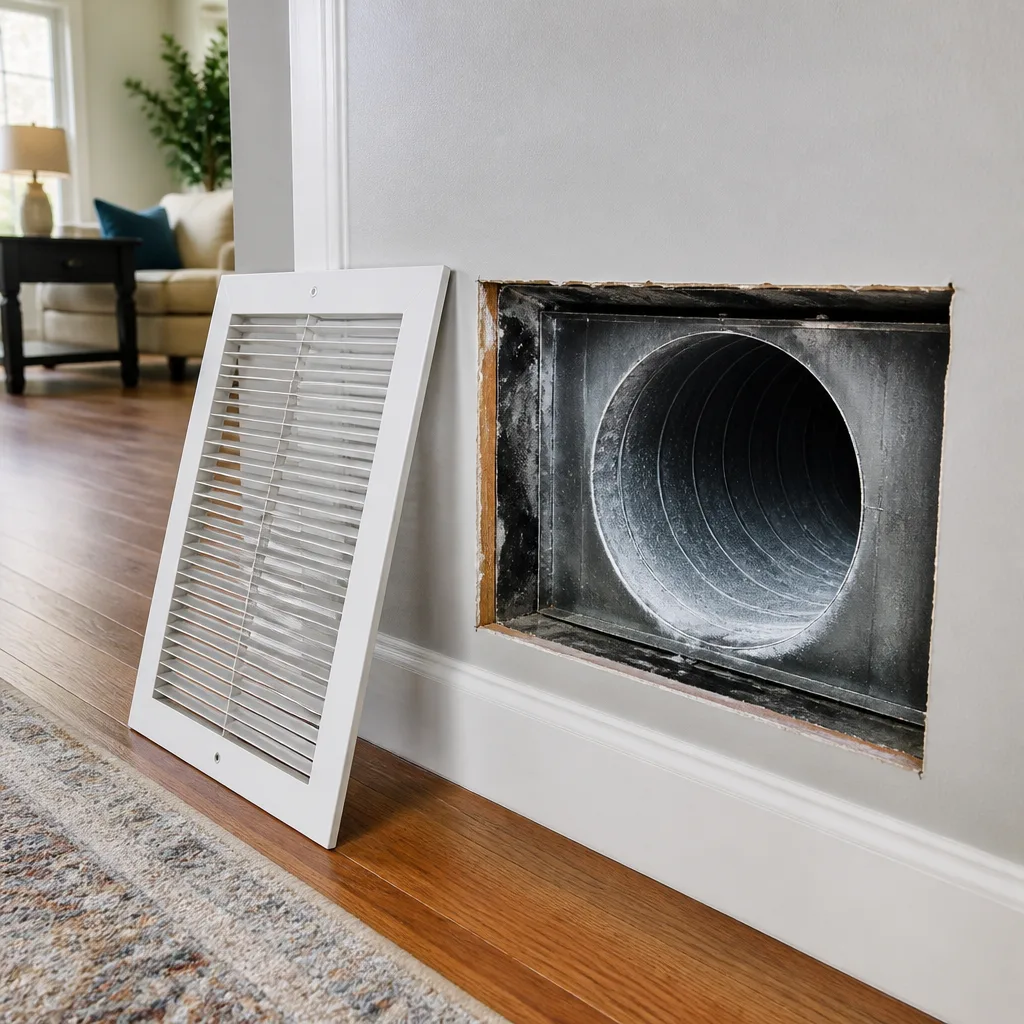
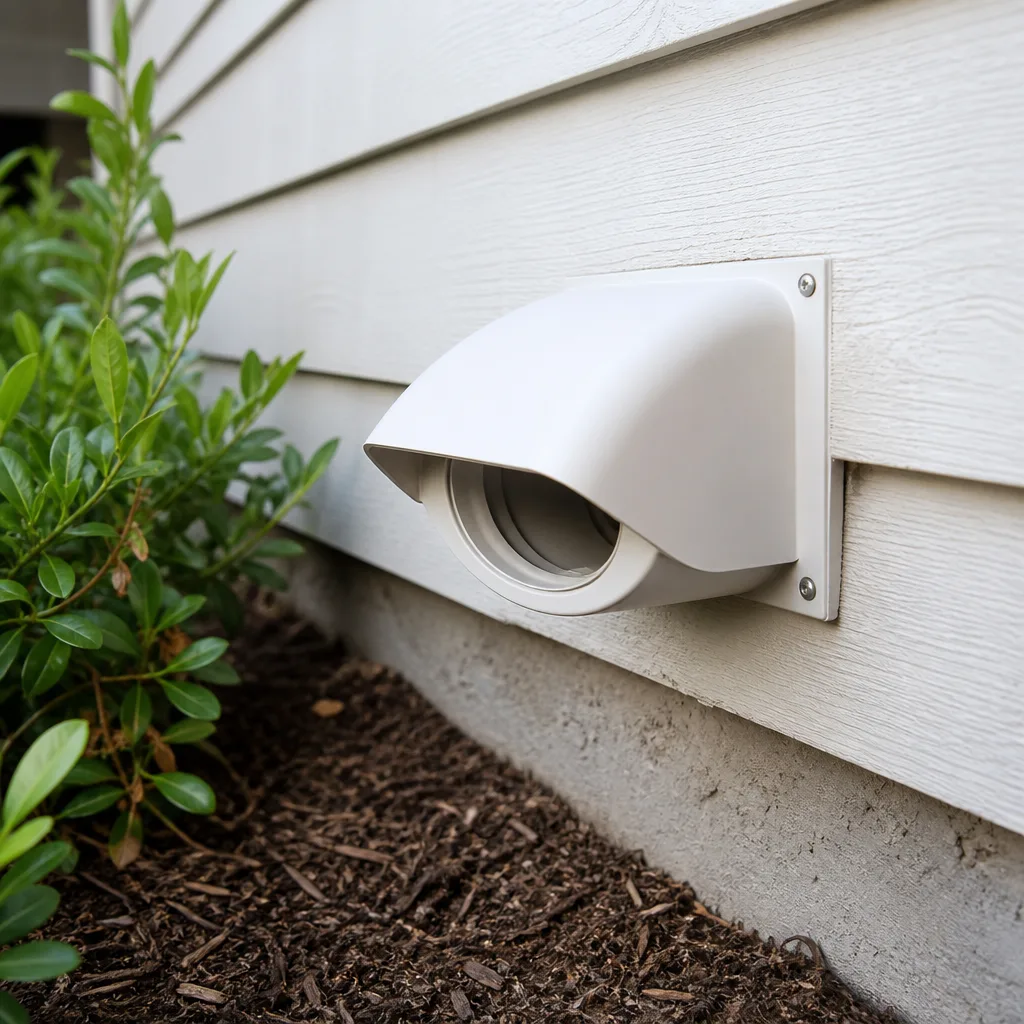
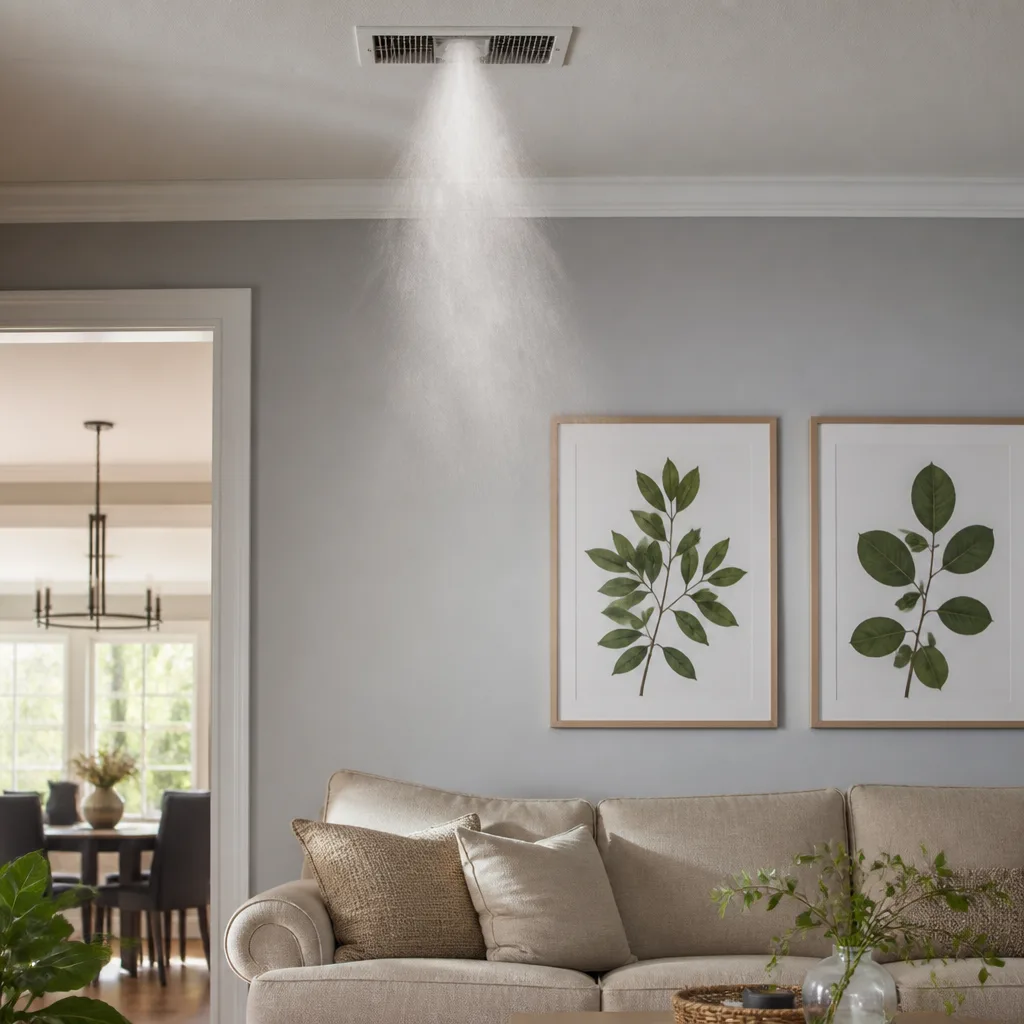
Whole-system duct and dryer vent check with before-and-after photos - you see exactly what came out of your vents
That "$99 whole-house special" is a bait ad - the real number appears once they are in your hallway, or the "clean" is a shop-vac at the register. We photograph the inside of your ducts before and after instead.
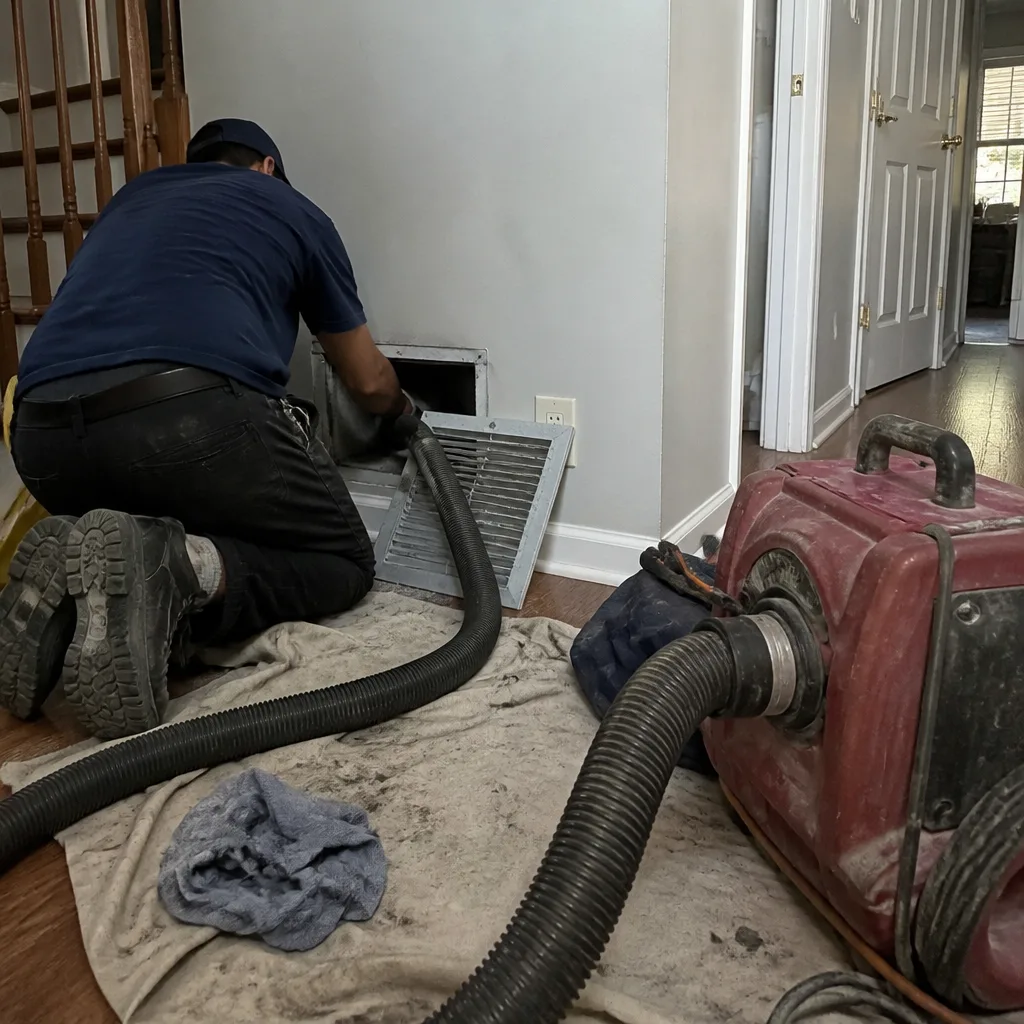 Before
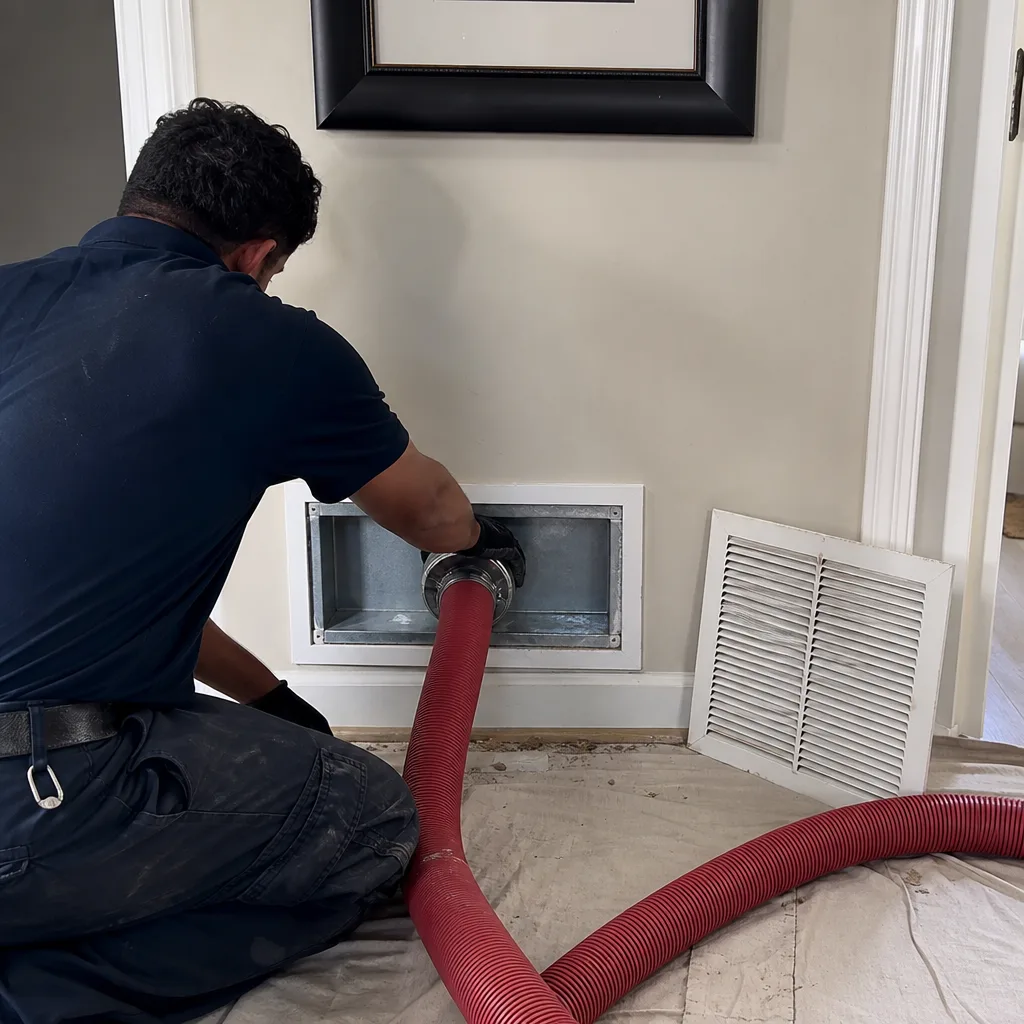 After
After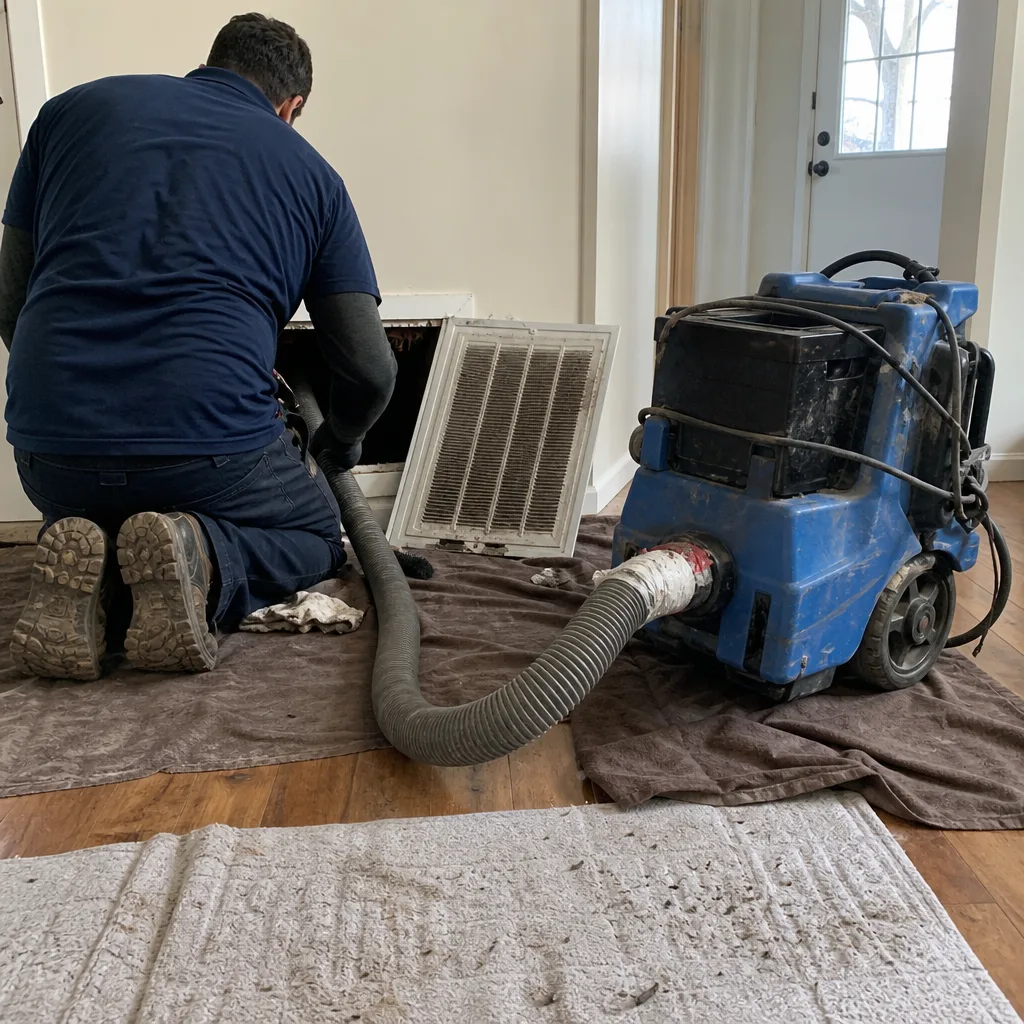 Before
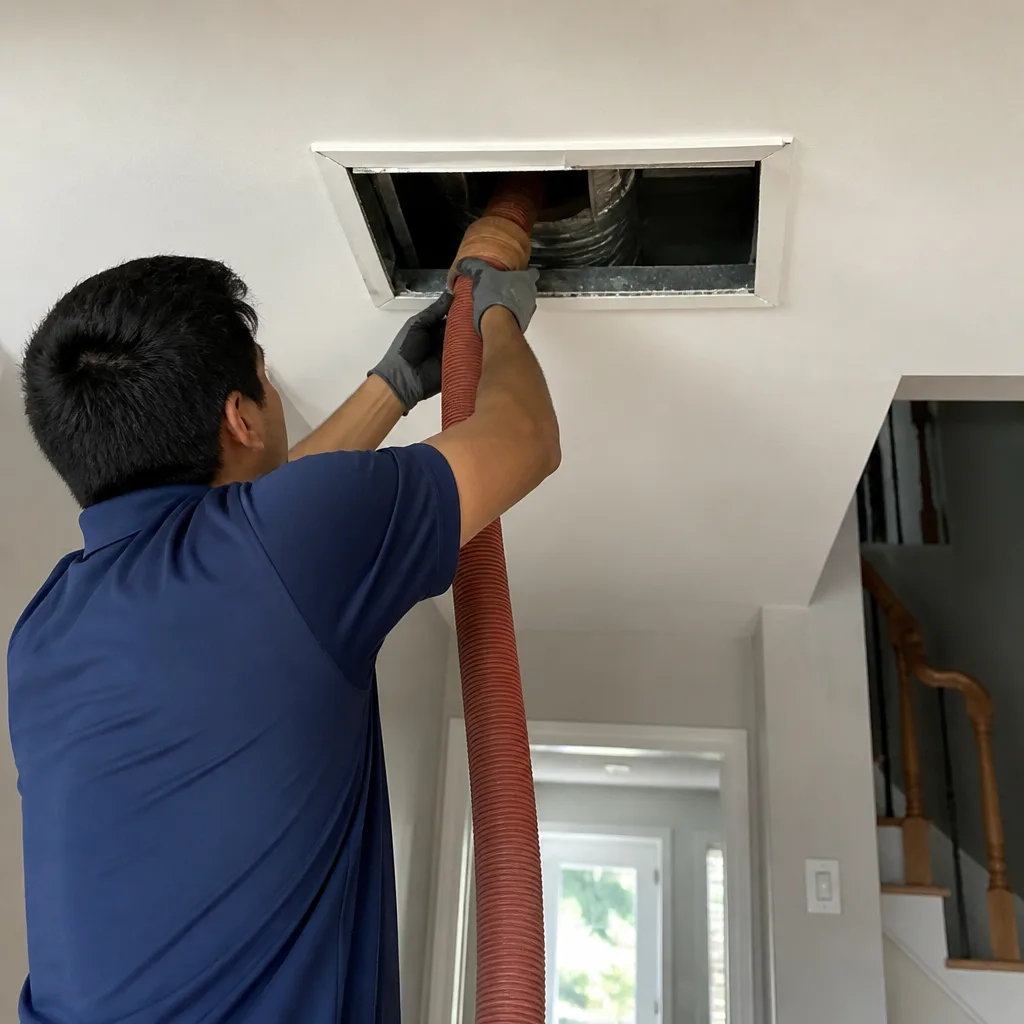 After
After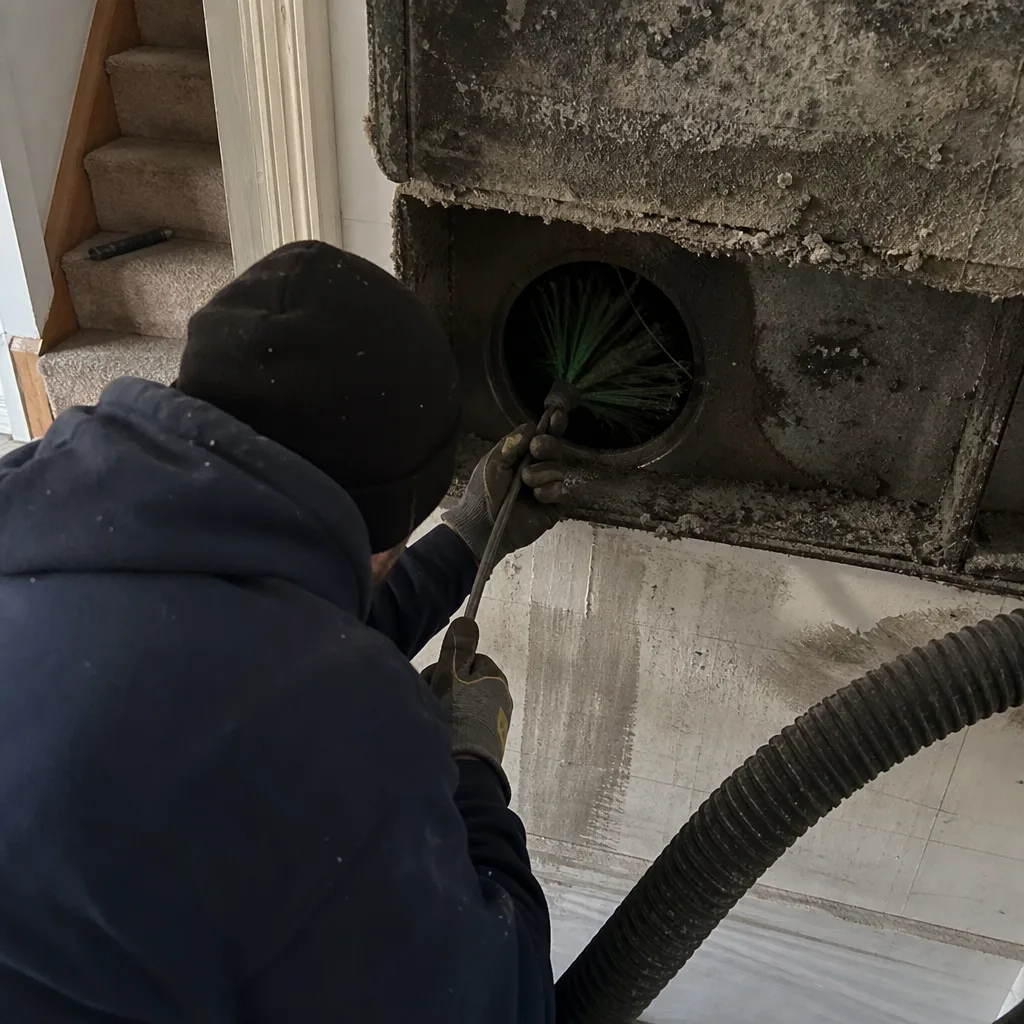 Before
 After
AfterHow to Hire a Air Duct Cleaning Contractor in Alexandria: A Step-by-Step Guide
Of the duct cleaning companies serving Northern Virginia, a significant number advertise NADCA membership but cannot produce a current technician certification number on request. Asking for that number before booking eliminates more bad actors than any review platform will. In Alexandria, where the housing stock spans 1920s bungalows in Del Ray, mid-century ranches in Rosemont, and new construction in Carlyle, duct systems vary enormously in accessibility, material, and contamination type. This guide teaches homeowners to evaluate contractors the way an adjuster evaluates a claim: on paper, not on pitch. You’ll learn which three documents to demand before any truck rolls, how to verify credentials that companies routinely fake, and what legitimate post-job documentation actually looks like.
Quick Answer
Hiring a legitimate Air Duct Cleaning services contractor in Alexandria requires requesting three documents before booking: a written line-item price with your address noted, a scope of work listing every duct run to be cleaned, and proof of current liability insurance naming your property as the service location. Verify NADCA technician certification independently through NADCA’s online registry rather than trusting a logo on a website. Any contractor who quotes without inspecting your ductwork first is structurally unable to price accurately.
Table of Contents
- The Three Documents Every Alexandria Contractor Must Provide First
- How to Verify NADCA Certification (And Spot the Fakes)
- What a Proper Estimate Appointment Includes
- Red Flags in the First Phone Call
- How to Evaluate Post-Job Documentation
- Alexandria-Specific Considerations: Climate, Codes, and Housing Stock
- Professional Equipment Standards: What the Truck Should Carry
- Common Mistakes to Avoid
- When to Call a Professional
- Frequently Asked Questions
- The Bottom Line
BeforeAfterThe Three Documents Every Alexandria Contractor Must Provide First
The duct cleaning industry in Northern Virginia runs on verbal promises and vanishes into phone-tag when something goes wrong. The antidote is documentation requested before the first appointment is scheduled. These three documents separate legitimate operators from itinerant coupon services.
Document 1: Written Line-Item Price with Your Address
A legitimate estimate specifies what you will pay, for what, at your specific address. Not a range. Not “starting at.” Not a per-vent figure that balloons once the crew arrives. At CleanRun Air Duct Cleaning Alexandria home, every job is quoted under Haven Standard Clause 1: a single flat price per system, delivered in writing before any work begins. The document should note your street address, the date of estimate, the number of HVAC systems, and the total price with no contingent add-ons.
Be especially wary of the $79-$149 coupon model common in Fairfax County and Alexandria. These prices typically cover a cursory vacuuming of visible register openings, not full-system cleaning. The upsell arrives in your living room, where the technician discovers “unexpected mold” or “blocked returns” that somehow every customer has. A written flat price, agreed in advance, removes this structural incentive for fabrication.
Document 2: Scope of Work Describing Each Duct Run
The scope should list every component to be addressed: supply plenum (the main distribution box), each supply duct run to individual registers, return air pathways, and the return plenum. In older Alexandria homes near Old Town, galvanized steel ductwork from the 1950s may require different handling than flex duct in a 2019 Carlyle build. The scope should note material type and any access limitations.
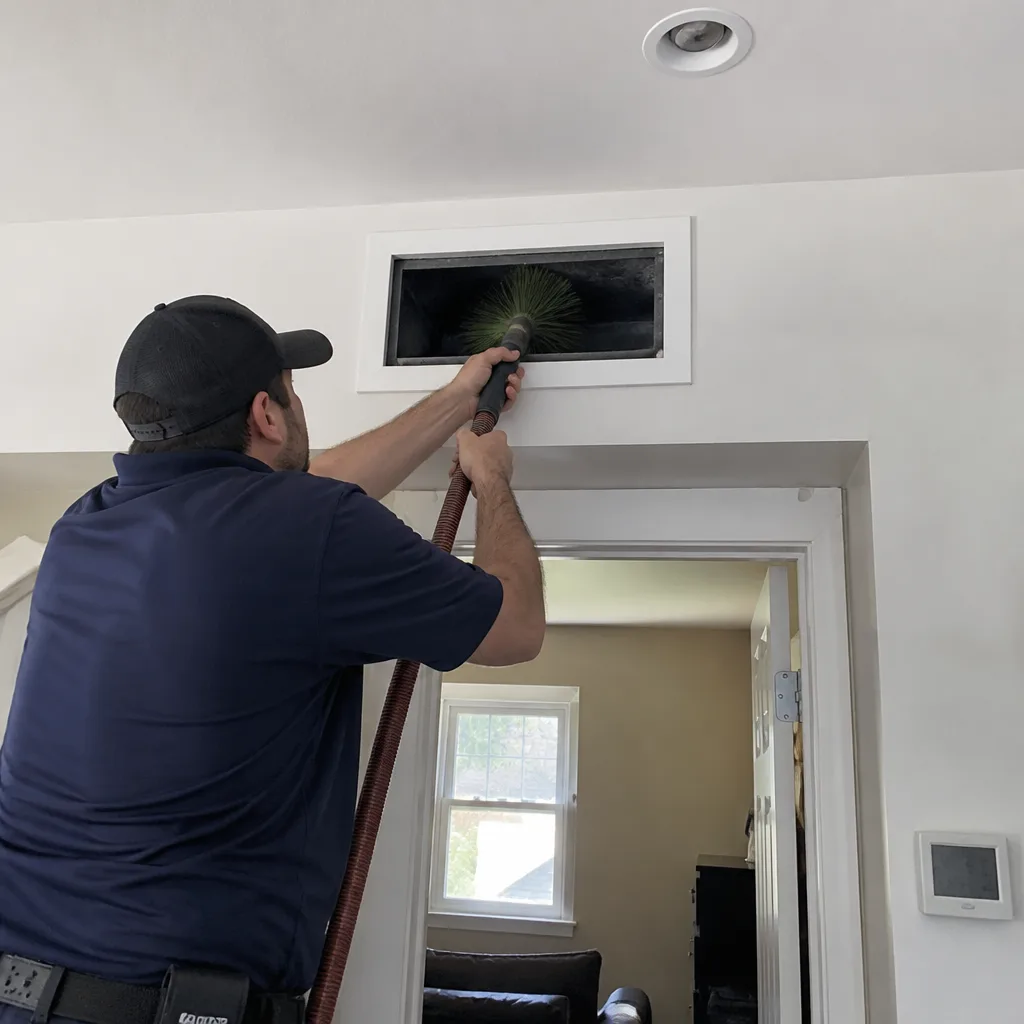
Ask specifically: “Which registers will you open and clean beyond the opening?” A shop-vac at the register face is not duct cleaning. The scope should state that the contractor will access the duct interior, typically through register openings or created access points, and specify whether those access points will be properly sealed afterward.
Document 3: Proof of Current Liability Insurance
Request a certificate of insurance (COI) naming your property address as the service location. This is different from a generic policy declaration. The COI should show general liability coverage of at least $1 million per occurrence and should be current through your scheduled service date. In Alexandria, where many homes carry mortgages requiring maintenance by insured contractors, this document protects your loan compliance as well as your assets.
Some contractors carry insurance through their personal auto policy or a general handyman rider that excludes ductwork specifically. The COI should list “air duct cleaning” or “HVAC cleaning” in the operations description. If the contractor hesitates or offers to “bring it on the day of,” that hesitation is your answer.
How to Verify NADCA Certification (And Spot the Fakes)
NADCA membership and NADCA technician certification are different things, and the distinction matters. Membership is a business relationship. Certification requires examination, continuing education, and recertification every three years. Many Alexandria-area companies display the NADCA logo without a single certified technician on staff.
Step-by-Step Verification Process
- Ask the company for the full name and ASCS (Air Systems Cleaning Specialist) certification number of the technician who will perform your cleaning.
- Navigate to NADCA’s official website and locate the “Find a Certified Professional” directory.
- Enter the technician’s last name or ASCS number. A valid certification will display the technician’s name, certification date, and expiration date.
- Cross-reference the company name. NADCA lists the certificant’s affiliated company. If the technician changed employers but the old company still claims them, that’s a flag.
- If the technician holds additional credentials (CVI for ventilation inspection, for example), verify those separately through NADCA’s credential lookup.
What you are looking for: an ASCS certification current through your service date, with the technician actively employed by the company you’re considering. What you will sometimes find: a certification expired two years ago, held by someone who left the company, or no record at all despite website claims.
In our experience serving Alexandria since 2013, roughly one in four companies advertising NADCA affiliation cannot produce a valid, current ASCS number when asked directly. The logo on the homepage means nothing. The certification number, verified independently, means everything.
What a Proper Estimate Appointment Includes
A contractor who quotes duct cleaning without seeing your system is guessing, and guesses tend to be wrong in ways that favor the contractor. In Alexandria’s varied housing stock, duct configuration affects pricing significantly. A single-story ranch in Rosemont with basement mechanical access presents different labor requirements than a three-story townhouse in Old Town with chase-mounted ductwork and finished ceilings.
What Should Happen During the Estimate
- The technician should inspect your air handler location, noting filter size, blower access, and whether the system uses a media filter or electronic air cleaner.
- They should count and locate all supply and return registers, including any that are painted shut or covered by flooring.
- They should identify the duct material: galvanized steel, flex duct, fiberboard, or ductboard. Each requires different cleaning protocols and equipment attachments.
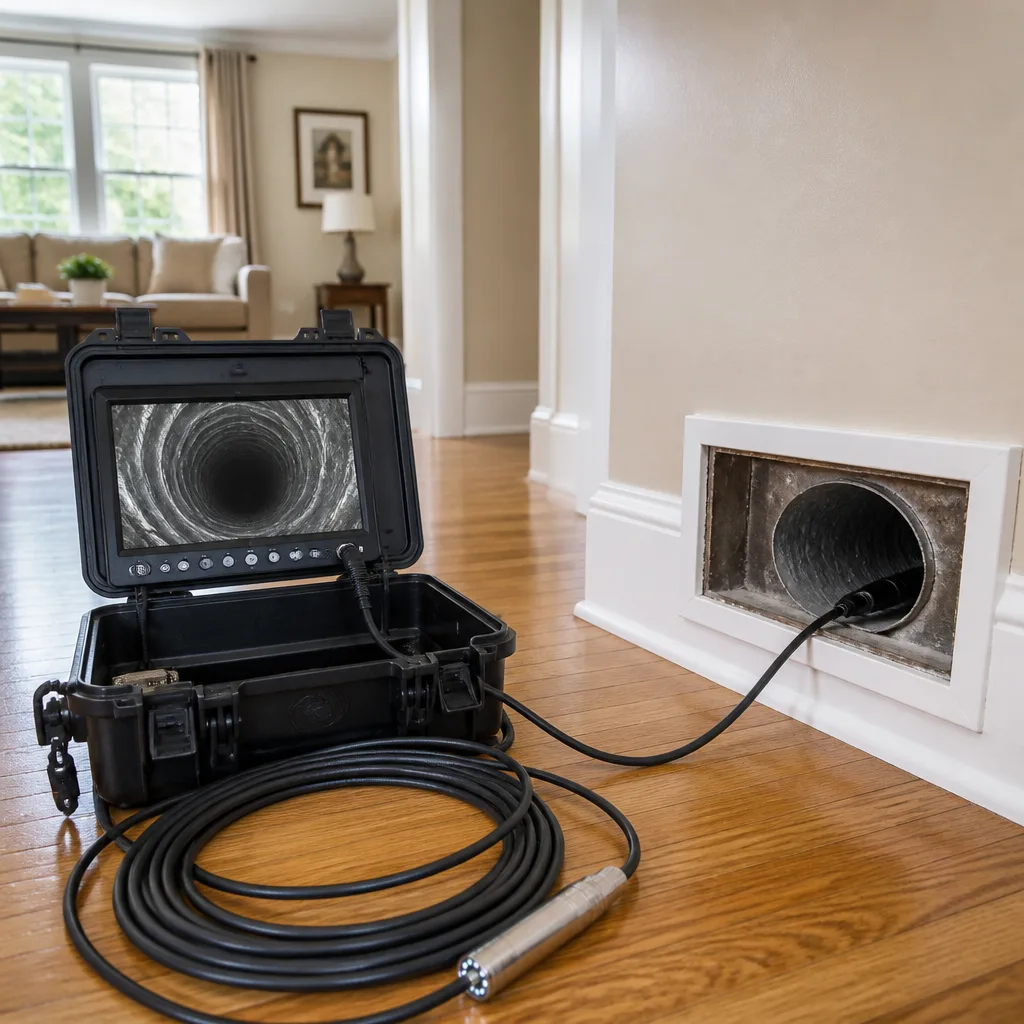
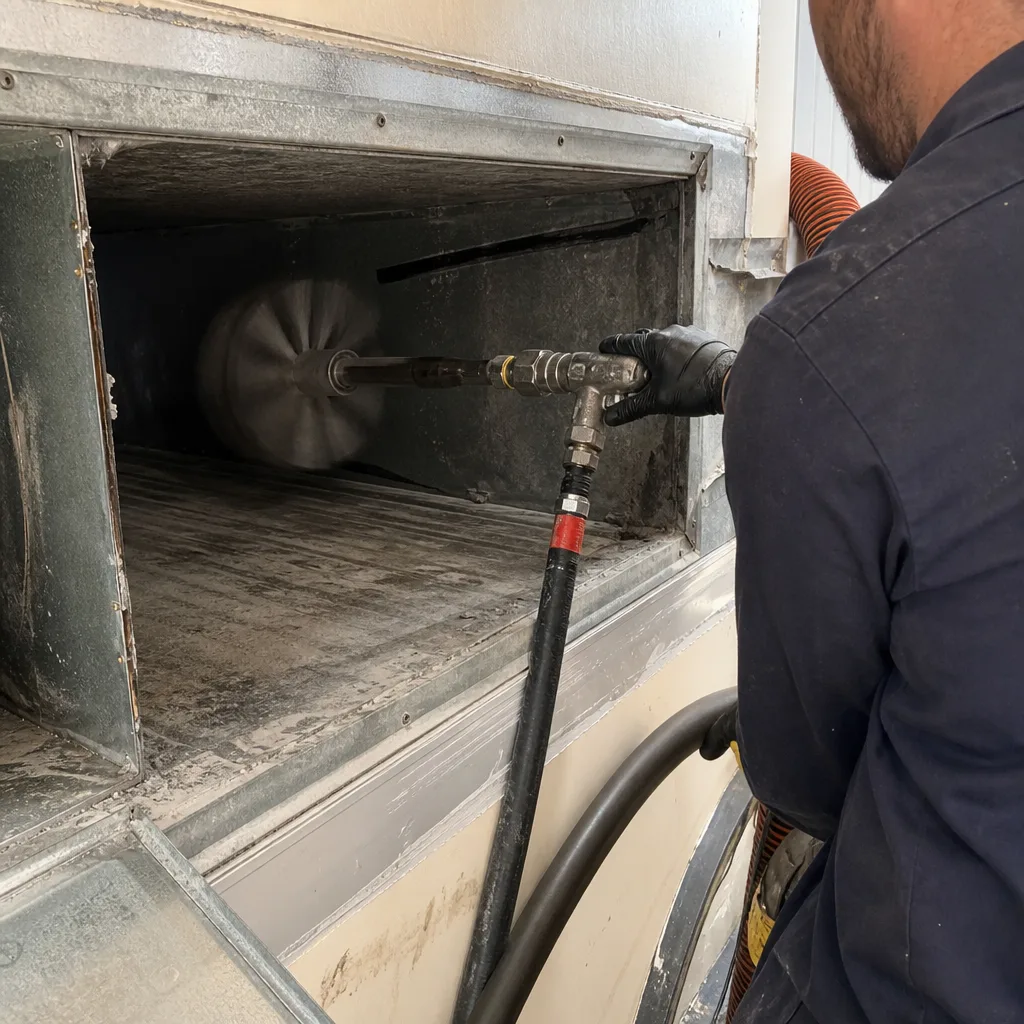
- They should photograph the interior of at least one supply and one return duct run, showing you the actual contamination level. This preview becomes the baseline for post-job comparison.
- They should explain any access limitations: finished basements with no ceiling access, ductwork embedded in concrete slabs (rare in Alexandria but present in some 1960s builds), or asbestos-wrapped ducts in pre-1980 homes near the waterfront.
The estimate appointment should conclude with a written price, not a verbal “ballpark.” At Air Duct Cleaning in Alexandria, we’ve found that estimates given without inspection average 34% below final invoice when the job is actually performed. The discrepancy is not accidental. It’s structural. Haven Standard Clause 1 exists precisely because a price given after inspection, in writing, with no pressure to book immediately, is the only honest way to quote this work.
Red Flags in the First Phone Call
The initial phone call reveals more than most homeowners recognize. These patterns, alone or in combination, predict a problematic experience with high reliability.
Pressure to Book Same-Day or “This Week Only”
Duct cleaning is a scheduled maintenance service, not an emergency. A company pushing immediate booking is typically filling routes for technicians paid on commission, not matching capacity to your actual need. In Alexandria, where many residents work in DC and schedule home services around federal holidays and congressional recesses, legitimate companies maintain predictable availability without artificial urgency.
Inability to State a Flat Rate or Per-System Price
“We need to see it first” is valid for the final quote. “We can’t even give you a range” is not. A company with actual experience in Alexandria homes can state typical pricing for common configurations: single-system ranch, dual-system colonial, townhouse with basement mechanical room. Refusal to discuss pricing structure at all suggests either extreme inexperience or a deliberate strategy to control the conversation in your home where upsell pressure is more effective.
Upsell Language Before Inspection
Be alert for preemptive mentions of “sanitizing,” “anti-microbial coating,” “mold prevention,” or “odor elimination” before anyone has seen your ductwork. These are high-margin add-ons with limited efficacy evidence, and their premature introduction indicates a sales process designed around service upgrades rather than actual cleaning. Legitimate sanitizing, when warranted, follows cleaning and is based on visual evidence of microbial growth, not a script.
Vague Equipment Descriptions
A contractor should be able to name their primary cleaning equipment by manufacturer and model. “Professional-grade truck-mounted system” is not an answer. “Rotobrush Beast with HEPA filtration” or “Nikro HP20G gas-powered portable with dual-stage vacuum” is. These are verifiable tools from established manufacturers. If the dispatcher cannot transfer you to someone who can name the equipment, the company may be subcontracting to unvetted crews or using inadequate portable units.
No Physical Address or Local License Verification
Ask where their office is located. Many low-price duct cleaning operations in Northern Virginia use virtual addresses or mail drops. A legitimate Alexandria contractor can name a physical location and should hold a Virginia Class A, B, or C contractor license appropriate to HVAC work. The license number should be verifiable through the Virginia Department of Professional and Occupational Regulation.
How to Evaluate Post-Job Documentation
The work is only as good as the paper trail that proves it. A contractor who leaves without documentation has no accountability mechanism, and you have no basis for warranty claim or dispute resolution.
The Photo Record: What It Should Show
Every duct run cleaned should have before-and-after images from the interior, not just the register face. The photos should be timestamped and should show identifiable landmarks: the same elbow, the same joint, or the same longitudinal seam, now clean. In our Documented Photo Record standard at CleanRun, delivered on every job since 2013, we photograph each supply and return run from two angles before cleaning and the identical angles after. The customer receives these as a standard deliverable, not upon request.
What inadequate documentation looks like: a single “before” photo of a filthy register and a single “after” photo of a clean register, with no proof they came from the same location or that the duct interior was addressed at all.
The Cleaning Report: Required Elements
- Date, address, and technician name(s)
- HVAC system identifier (System 1, System 2, etc. for multi-system homes)
- List of each duct run addressed, with before/after photo reference numbers
- Contamination type observed: dust/debris, construction residue, pet hair accumulation, moisture staining, or other
- Equipment used, including vacuum unit and agitation method
- Access points created and their closure method
- Any conditions noted that may affect future performance: disconnected duct segments, deteriorated flex duct, inadequate returns
- Written warranty or guarantee terms, with claim procedure
The 365-Day Done Right Promise we provide is backed in writing on every job, not stated in marketing copy and absent from the job folder. If a contractor’s “guarantee” exists only on their website, it does not exist.
Alexandria-Specific Considerations: Climate, Codes, and Housing Stock
Alexandria’s location on the Potomac, its humidity patterns, and its architectural diversity create duct cleaning considerations that don’t apply uniformly across Northern Virginia.
Humidity and Seasonal Mold Pressure
Alexandria averages 65-75% relative humidity from June through September, with basement mechanical rooms in homes near the waterfront often exceeding 80% during peak summer. This moisture load increases the likelihood of mold and mildew in ductwork, particularly in returns drawing from damp basement air. A contractor working in Alexandria should inspect for moisture staining as standard practice, not as an upsell opportunity. In our work across the city, we’ve found active microbial growth in roughly 15% of homes built before 1990 with unfinished basements, concentrated in summer and early fall.
Historic District and Preservation Requirements
Homes in Alexandria’s Old and Historic Districts face additional constraints. Exterior modifications, including new vent openings or equipment pads, require review by the Board of Architectural Review. While interior duct cleaning rarely triggers preservation review, contractors should be aware that some historic homes contain original plaster ductwork or transom-based ventilation systems that cannot be cleaned with standard rotary methods. We’ve encountered hand-formed galvanized duct from the 1920s in Del Ray homes that requires soft-bristle agitation and reduced vacuum pressure to avoid damage.
New Construction Residue
Alexandria’s building boom in Carlyle, Potomac Yard, and the West End has produced hundreds of homes with post-construction duct contamination. Drywall dust, fiberglass insulation fragments, and sawdust accumulate during construction when systems are run before final cleanup. New homeowners in these developments often schedule duct cleaning within the first two years, and the scope differs from maintenance cleaning: heavier debris loads, possible filter bypass during construction, and occasional discovery of leftover materials in ductwork. The estimate should reflect this reality, not apply a standard maintenance price to a heavy-duty job.
Local Permit and Code Context
Virginia’s Uniform Statewide Building Code, adopted with local amendments in Alexandria, requires that duct modifications meet specific sealing and insulation standards. Cleaning contractors who discover disconnected or damaged ductwork during service should note whether repair falls under permit requirements. While cleaning itself does not require permitting, duct replacement or significant modification in Alexandria may. A knowledgeable contractor flags this rather than performing unpermitted alterations.
Professional Equipment Standards: What the Truck Should Carry
The equipment used determines what is actually possible. Homeowners cannot be expected to specify models, but they can ask questions that reveal whether a contractor operates professional-grade tools or consumer-level substitutes.
Negative-Pressure Extraction Systems
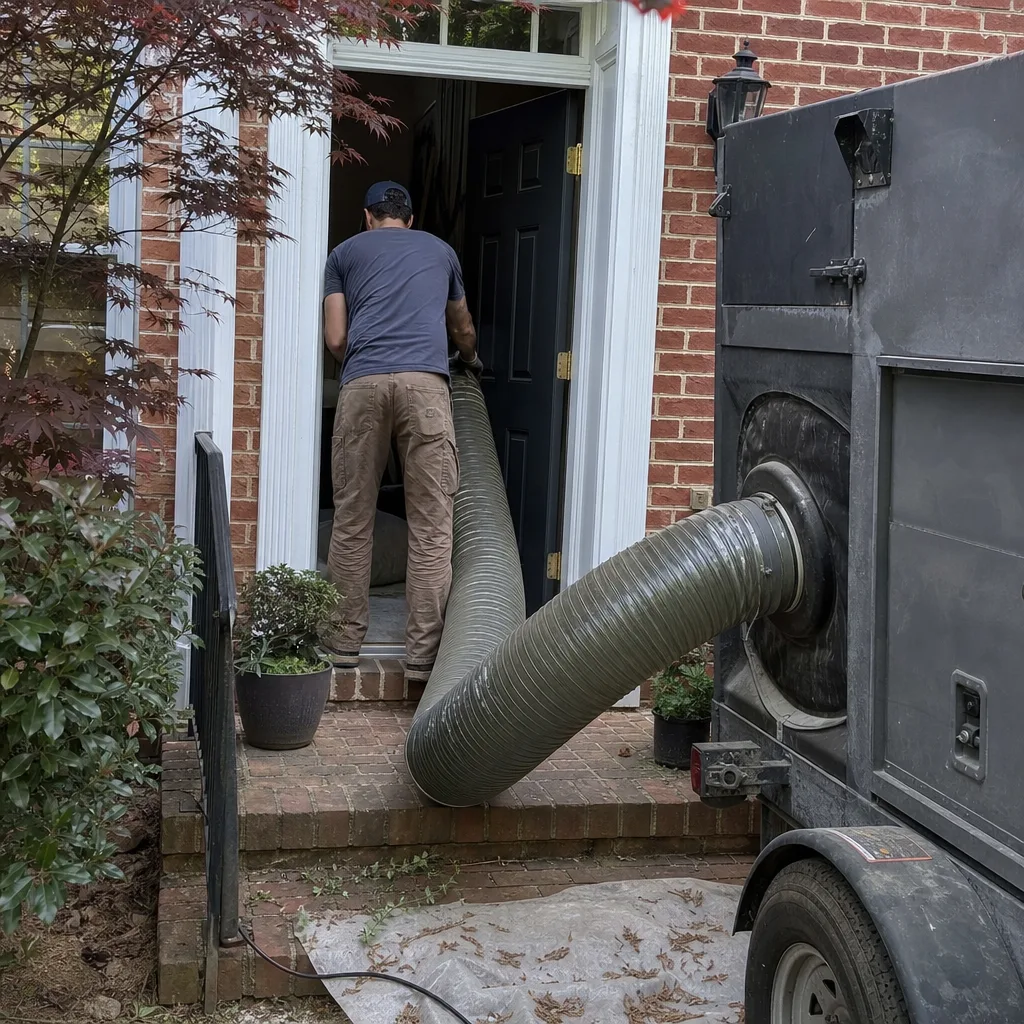
Legitimate duct cleaning relies on negative-pressure extraction: a powerful vacuum attached to the duct system creates suction throughout, while agitation devices dislodge debris. The vacuum must be capable of maintaining sufficient airflow (typically 4,000-5,000 CFM for residential systems) to prevent recontamination of the home during cleaning. Portable electric units often fall short of this threshold. Truck-mounted or gas-powered portables from recognized manufacturers are the standard.
Agitation Methods
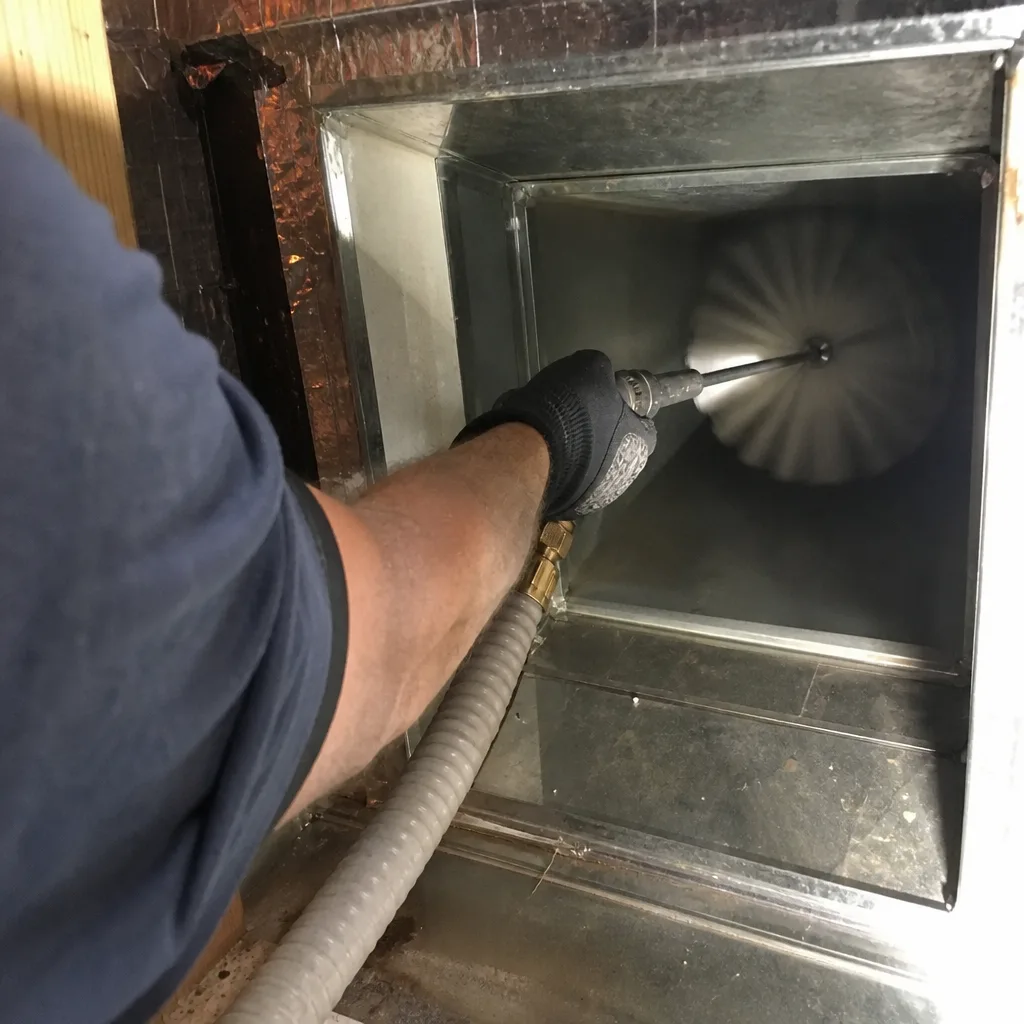
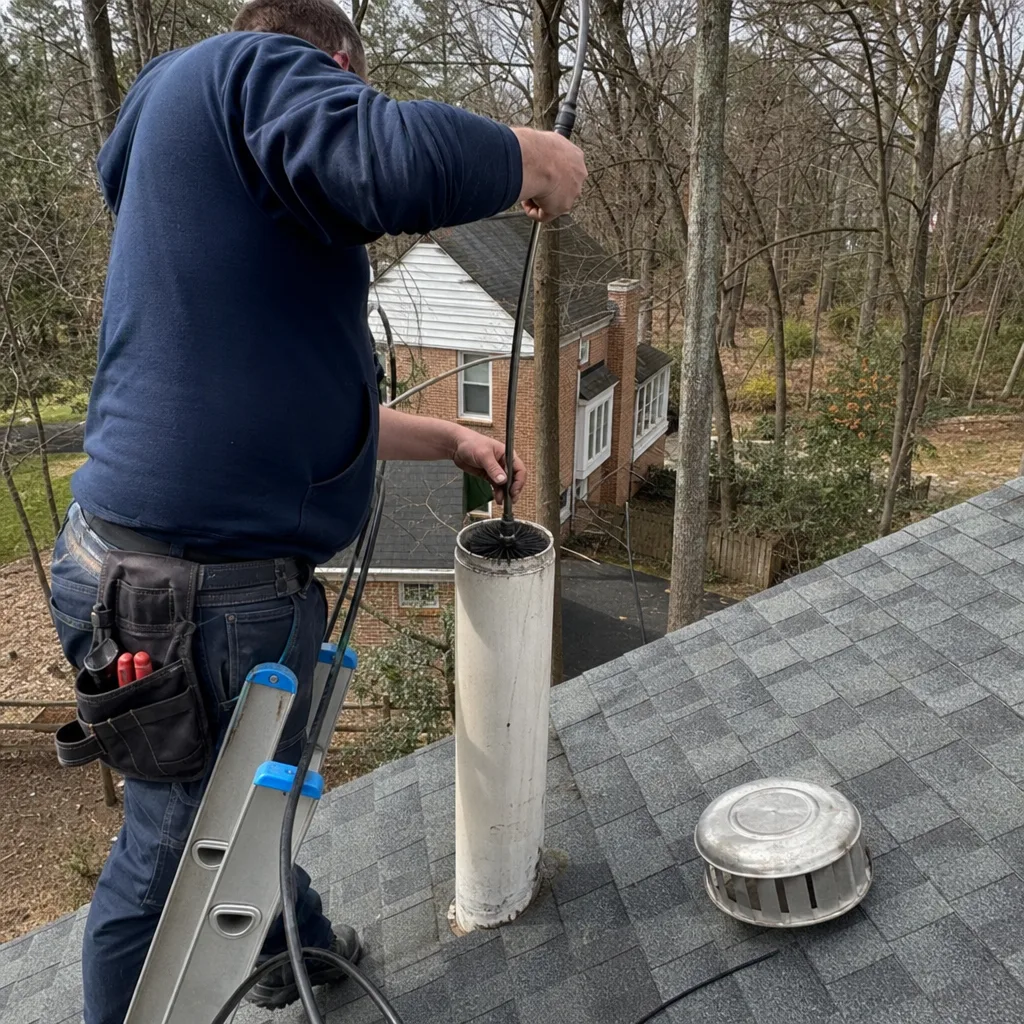
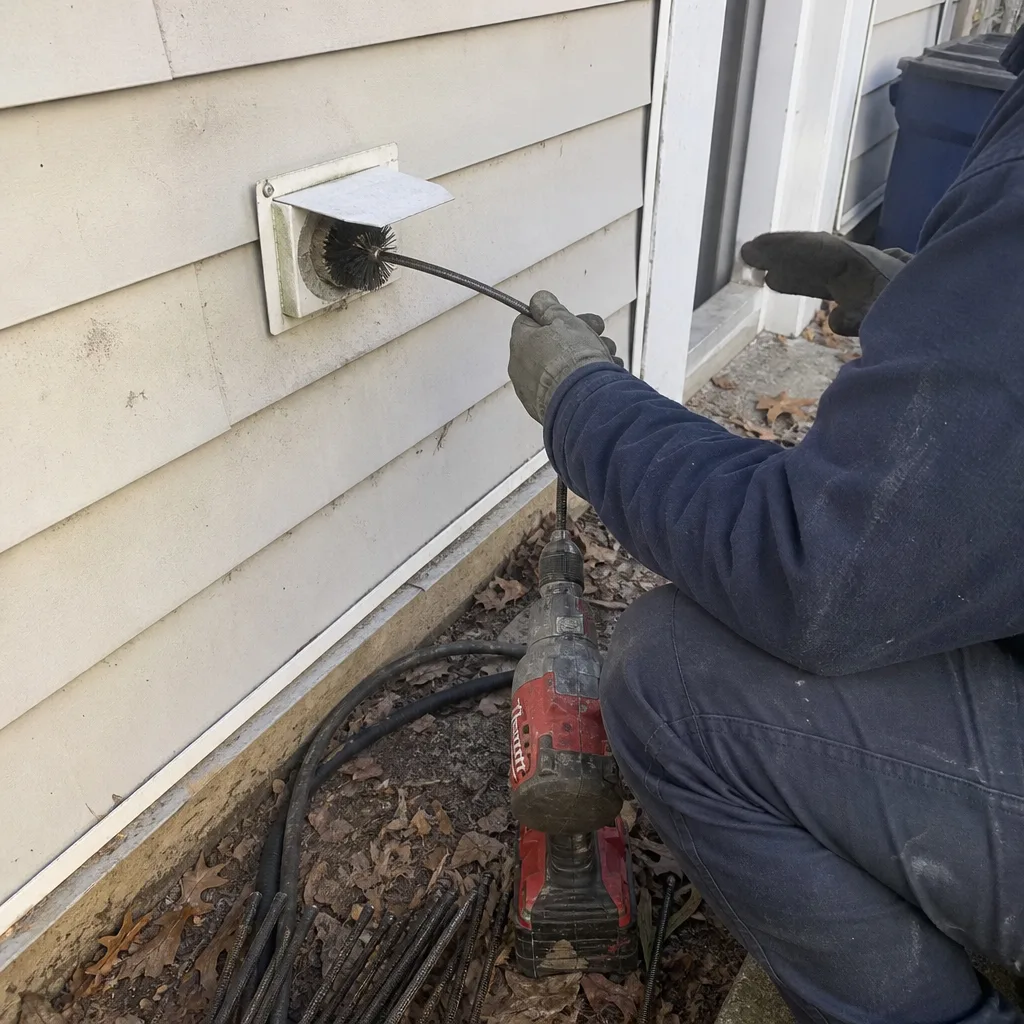
Compressed air whips, rotary brushes, and skipper balls each serve different duct configurations. Flex duct in newer Alexandria townhomes requires gentler agitation than rigid steel in 1960s ranches. The contractor should explain which method suits your system and why. At CleanRun, our equipment roster includes Rotobrush rotary systems for coated ductwork and Nikro portable extraction units for properties where truck access is limited, such as Old Town’s narrow alleys and restricted parking zones.
Filtration and Containment
HEPA filtration on the vacuum exhaust is non-negotiable. Without it, fine particulate dislodged from ductwork exits the vacuum and re-enters your home. Ask whether the equipment carries independent HEPA certification, not just a “HEPA-type” filter. Honeywell and Aprilaire manufacture validated filtration components used in professional duct cleaning systems; these are verifiable standards, not marketing claims.
Common Mistakes to Avoid
- Booking based on coupon price without verifying what’s included. The $79 special in Alexandria typically covers register vacuuming only, with the “full system” price revealed after arrival. Always request the complete price for your specific home configuration before scheduling.
- Assuming NADCA membership equals certified technicians. Membership is a business fee; certification requires examination. Verify the specific technician’s ASCS number through NADCA’s online registry before booking.
- Accepting verbal estimates. Virginia law provides certain protections for written contracts over $500, but the practical protection is simpler: a written price cannot be disputed as “misunderstood” later. Haven Standard Clause 1 requires written pricing precisely because verbal agreements fail under pressure.
- Neglecting to verify insurance specifically names your address. A general liability policy is not proof of coverage for your job. The certificate of insurance must list your property as the service location to be valid for your protection.
- Failing to request post-job photos before paying. Once the crew leaves with your payment, your leverage disappears. The photo record should be delivered and reviewed before final invoice acceptance. CleanRun’s Documented Photo Record is included as a standard deliverable, not an optional extra.
- Ignoring access limitations during estimate. Finished basements, built-in cabinetry over registers, or ductwork in conditioned attics affect both pricing and methodology. A contractor who doesn’t note these constraints during estimate is not planning adequately.
- Scheduling cleaning without recent HVAC filter replacement. A severely clogged filter can mask underlying duct issues or create false impressions of duct cleanliness. Replace your filter 2-3 weeks before estimate so the technician sees normal system conditions.
When to Call a Professional
Certain conditions indicate duct cleaning should proceed promptly rather than remain on the “someday” list. Visible mold growth inside hard surface ducts, substantial debris release from registers when the system starts, or evidence of vermin infestation require professional intervention. In Alexandria’s humid summers, musty odors that intensify when the AC runs often signal microbial growth in the return plenum or evaporator cabinet, not merely “dirty ducts.”
Post-renovation cleaning is advisable when any drywall work, flooring replacement, or significant carpentry occurred with the HVAC system operating. Construction dust bypasses standard filtration and settles in ductwork, accelerating component wear and reducing airflow efficiency.
For homeowners researching options, HVAC Cleaning in Alexandria addresses system-wide contamination beyond ductwork alone. CleanRun Air Duct Cleaning Alexandria offers free estimates throughout Alexandria, including same-week availability for most neighborhoods. Call (240) 318-7712 to schedule an inspection, receive a written flat price under Haven Standard Clause 1, and review sample documentation from previous jobs before committing to any work.
Frequently Asked Questions
Whole-system duct cleaning for a typical single-family home in Alexandria ranges from $450 to $850, with multi-system homes or properties with finished basements and limited access toward the higher end. See our Air Duct Cleaning Cost Breakdown: The Alexandria Homeowner’s Reference for 2026 for detailed pricing factors. Townhouses and condos with compact mechanical spaces may fall at the lower range if duct runs are short and accessible. Prices below $300 for a complete system should be scrutinized carefully, as they typically exclude components that any thorough cleaning must address. Call (240) 318-7712 for a written flat price specific to your home - estimates are free and include inspection.
The price gap usually reflects scope difference, not competitive pricing. A $149 service cleans register faces and the first few feet of ductwork with a portable vacuum. A $600 service addresses the full supply and return system with negative-pressure extraction, agitation, and documented photo verification. The cheaper quote is not a bargain if it doesn’t include the work you assumed was implied. Always request a written scope listing every component to be cleaned before comparing prices.
Demand timestamped before-and-after photographs from inside the ductwork, not just register faces. The photos should show identifiable landmarks proving the same location was photographed twice. A written cleaning report should list each duct run addressed and cross-reference photo numbers. Without this documentation, you have no verification mechanism. CleanRun’s Documented Photo Record, standard on every job since 2013, provides exactly this accountability.
For most Alexandria homes, every 3-5 years under normal occupancy and with regular filter maintenance. Homes with pets, smokers, recent renovations, or residents with severe allergies may benefit from more frequent service. New construction should be cleaned within 18 months of occupancy due to construction residue accumulation. The “every year” recommendation some companies promote is unnecessary for typical households and suggests a revenue model rather than maintenance science.
Treat this as disqualifying. Ask for the specific ASCS certification number and the certificant’s full name. If the company deflects, provides only a membership number, or claims the registry is “out of date,” do not proceed. NADCA updates its certified professional directory in real time. A company willing to misrepresent credentials will likely misrepresent other aspects of their service. In our experience, this is one of the most reliable predictors of substandard work.
No. Duct cleaning itself does not require permitting in Alexandria or Virginia generally. However, if cleaning reveals damaged or disconnected ductwork requiring replacement or significant modification, those repairs may fall under permit requirements depending on scope. A knowledgeable contractor notes this boundary and advises accordingly rather than performing unpermitted alterations. CleanRun technicians are trained to flag conditions requiring permit consultation without pressuring immediate upgrade decisions.
The Bottom Line
Hiring a duct cleaning contractor in Alexandria is an exercise in documentation discipline. The three documents, verified NADCA credentials, proper estimate inspection, and rigorous post-job paperwork separate accountable professionals from itinerant operators. The industry’s reputation for bait-and-switch persists because most homeowners evaluate contractors on convenience and price rather than verifiable process. Reversing that evaluation, demanding paper before promises, protects both your home and your budget. Explore more guides & resources to continue evaluating home services with confidence. In a market saturated with $79 coupons and vanishing crews, the contractor who puts pricing, scope, and proof in writing before work begins is the exception worth finding.
Written by Tomas Reyes, Owner at CleanRun Air Duct Cleaning Alexandria, serving Alexandria since 2013.